Your Bag Is Empty
Explore timeless jewelry that carries love and inspires lasting change
Every purchase gives one person access to clean, life-changing water.
Explore timeless jewelry that carries love and inspires lasting change
The right choice among affordable diamond alternatives depends on the look you love, the durability you need, a comfortable price, and the sourcing information available for the exact stone.
What are diamond alternatives? A laboratory-grown diamond is a real diamond with essentially the same chemical, physical, and optical properties as a natural diamond. It grows in a laboratory and has a different growth history.
Moissanite, white sapphire, white topaz, and cubic zirconia are different materials. Each can serve as a diamond substitute, or simulant, by imitating part of a diamond’s look.
That distinction matters. The FTC Jewelry Guides call for clear descriptions that help shoppers tell laboratory-grown diamonds from simulated or imitation stones. If you want a colorful center stone instead, our gemstone engagement ring guide covers options beyond the colorless look discussed here.
If you’re comparing ethical diamond alternatives, focus on specific disclosures rather than a blanket label. Ask how the stone was created or sourced, whether treatments are disclosed, and what documentation comes with it.
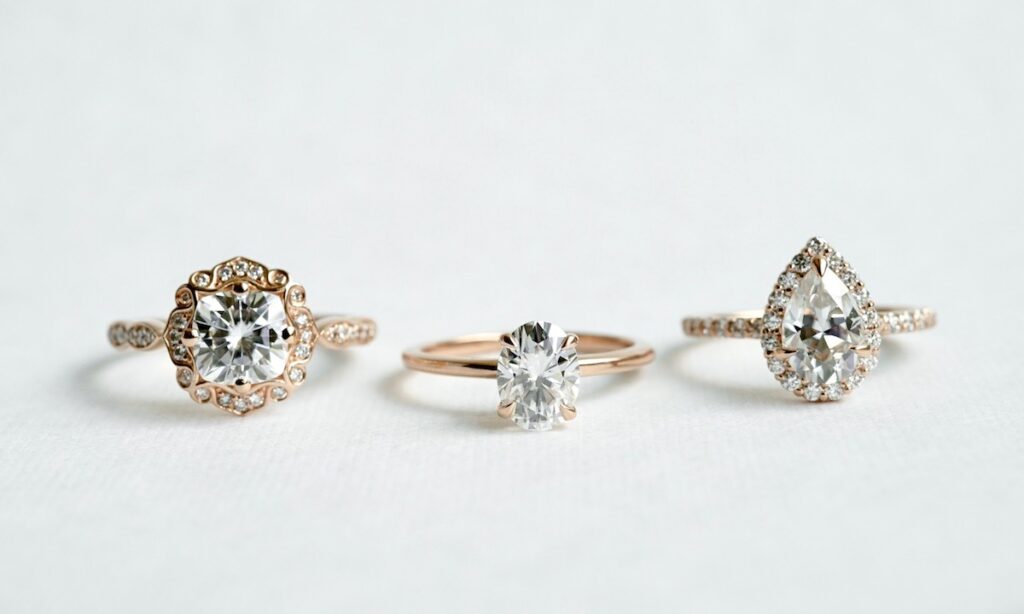
Left: Victoria with 7mm Cushion Moissanite | Middle: Mae with 8x6mm Oval Moissanite | Right: Elle with 9x6mm Pear Moissanite
No single stone is better than diamond for everyone. The best diamond alternative is the one whose appearance, care needs, and origin fit your priorities.
The best diamond alternative rings combine the right stone with a setting that protects its vulnerable points. A carat is a unit of weight, not a stone type, so changing gems is not an alternative to carat weight. If you’re comparing diamond replacements for a lost center stone, match the millimeter dimensions and setting requirements as carefully as the look.
Compare stones with the same shape, carat weight, color, clarity, cut, and grading details before looking at price.
That gives you a like-for-like view and helps prevent a lower price from hiding a difference in specifications.
Do Amore offers both laboratory-grown and responsibly sourced, conflict-free natural diamonds, so you can compare origins without being pushed toward one.
Its selection process filters out diamonds with brown, green, or milky qualities (BGM) and uses clean-energy prioritization.
Ask to see each grading report and compare the exact stones, not category averages.
Each option offers a different balance of sparkle, durability, origin, and price.
A laboratory-grown diamond is the closest match to a natural diamond because both stones are diamonds. According to GIA, the two have essentially the same chemical, physical, and optical properties. Their growth history and some identifying features differ, which is why trained gemologists and specialized screening can separate them.
Both types rank 10 on the Mohs scale and can deliver the same balance of brilliance, fire, and scintillation when well cut. Laboratory-grown diamonds often cost less than comparable natural diamonds, but the gap changes with market conditions, grading details, shape, and size.
You may still see older comparisons framed as 30-50% of the price. Treat that as historical context, not a current pricing promise. Compare live stones with like-for-like grading details before deciding.
Modern laboratory growth can produce diamonds across familiar white color and eye clean clarity ranges. A standard diamond tester may not distinguish laboratory-grown from natural diamond, so read our diamond tester guide for what those devices can and cannot confirm.
You can explore Do Amore’s Lab Diamonds here or browse lab diamond engagement rings once you understand the trade-offs.
Laboratory-grown diamonds give you diamond’s familiar appearance and daily-wear hardness with a different origin and often a more accessible price. They are a strong choice when you want a diamond rather than a simulant.
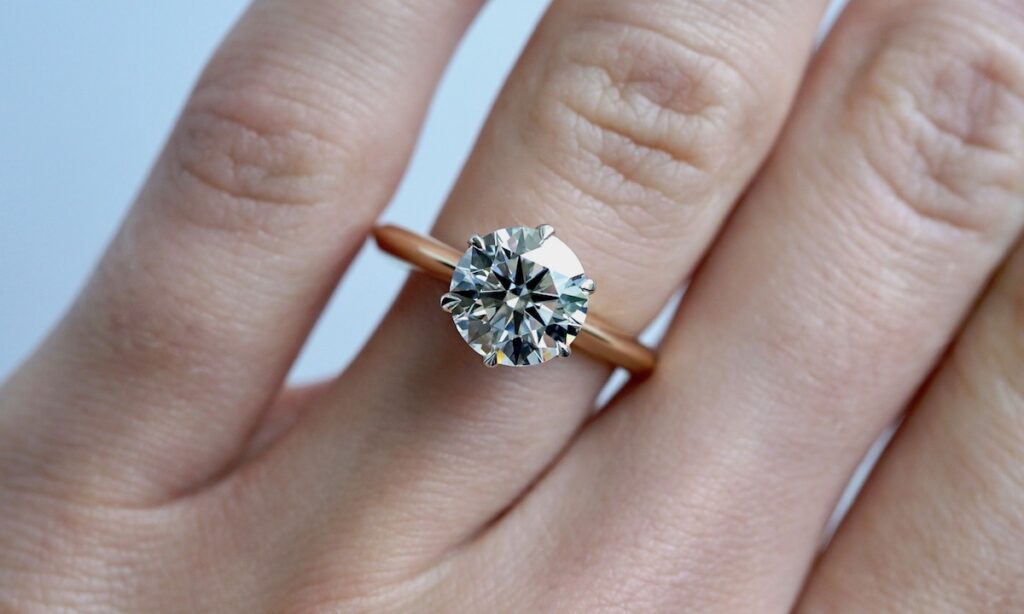
Two-tone Luna Engagement Ring with 2.2ct Lab-Created Diamond
Moissanite is a laboratory-created silicon carbide gemstone with more fire than diamond. GIA notes that it can range from colorless to near-colorless, ranks 9.25 on the Mohs scale, and may show slight yellow or gray color at some angles.
That extra fire is the point for many couples. If you’re choosing between two durable daily-wear options, our moissanite vs. lab diamond guide breaks down how their sparkle, material, and price differ.
Moissanite ranges from colorless to near-colorless without tying the choice to one brand or grade. It may look crisp and colorless face-up, then show a warmer tint or stronger rainbow flashes from another angle. See Do Amore’s wide range of it here.
Moissanite is a great diamond alternative if you want noticeable fire, strong scratch resistance, and good value. Browse moissanite engagement rings to see how different shapes and settings handle its lively sparkle. It is one of the most practical diamond ring alternatives for daily wear.
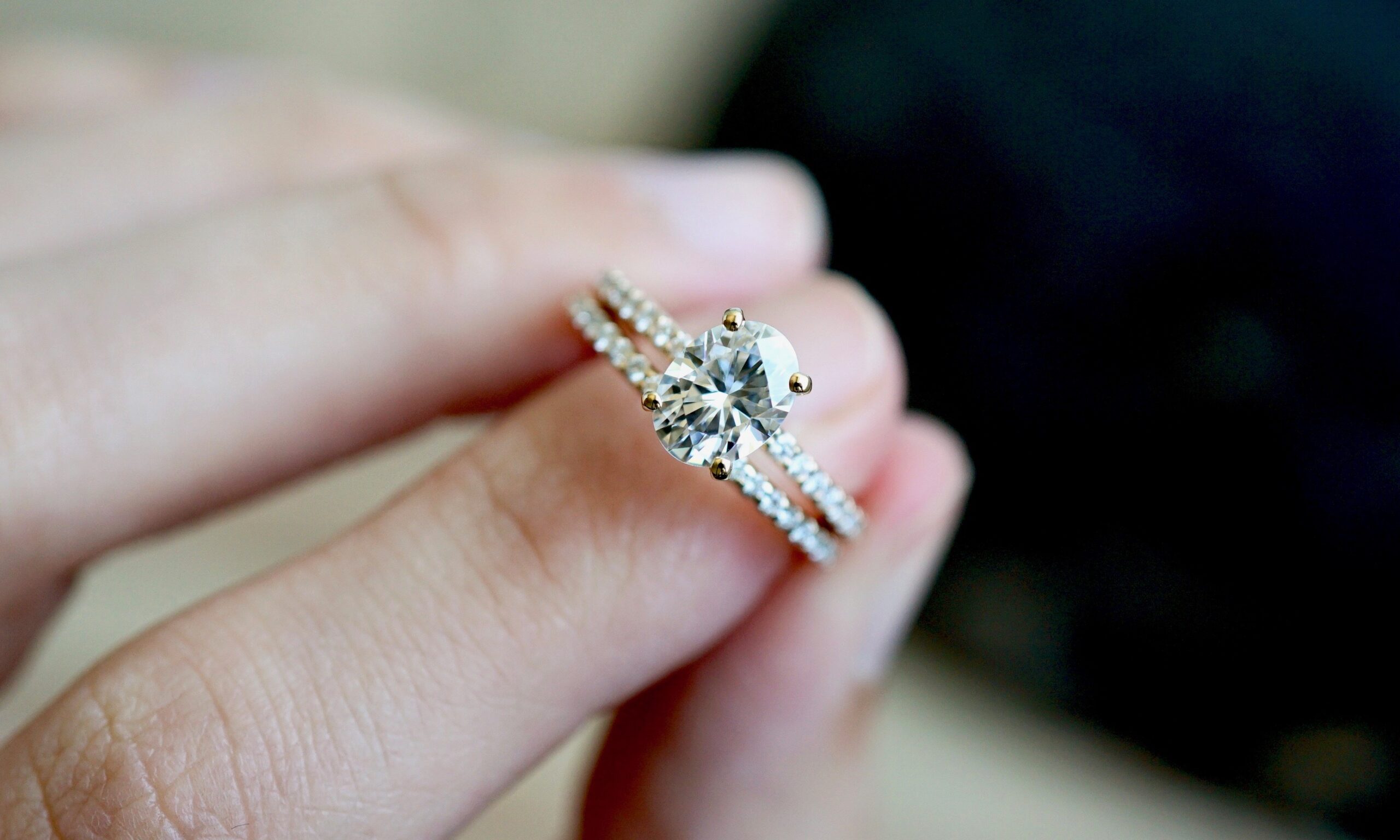
Diana Engagement Ring Set with an 8x6mm Oval Moissanite
White Sapphire is a natural diamond alternative with a calm, all-white sparkle. Sapphire is corundum, which ranks 9 on the Mohs scale. GIA notes that corundum has excellent toughness and no cleavage, making it well suited to rings worn regularly.
Its light return is softer and less fiery than diamond or moissanite. That quieter look is exactly why some people prefer white sapphire.
Treatment can affect both disclosure and care. Instead of assuming a white sapphire is untreated, ask the seller what treatments, if any, the stone has received and request that information in writing.
White sapphire is a durable natural option if you prefer understated white sparkle. Our white sapphire vs. diamond guide explains the visual differences in more depth, and you can view the White Sapphire collection here.
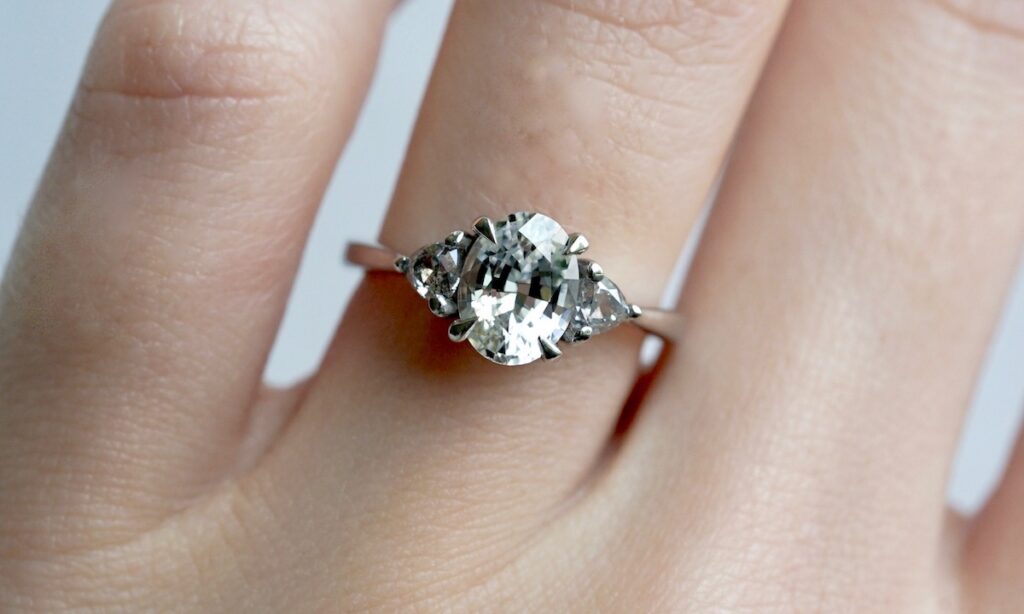
Custom Engagement Ring with 8x6mm Oval White Sapphire
White topaz is a natural, colorless gemstone with cool gray-white sparkle. It ranks 8 on the Mohs Hardness Scale, so it resists scratches better than many softer gems. But hardness is not the whole durability story. GIA’s topaz guidance notes that cleavage makes topaz vulnerable to breaking from a sharp blow or sudden temperature change.
Choose a protective setting, such as a bezel, 6-prong, or halo. Remove the ring for activities that could expose it to hard impacts.
White topaz sits in the lowest relative price band in this guide. Availability and stone-specific pricing can change. Pair it with one of Do Amore’s ethical engagement ring settings and email us here to confirm current options rather than relying on an old fixed price.
White topaz can deliver a larger-looking center stone for a lower relative price. It needs more thoughtful setting protection and wear habits than diamond, moissanite, or sapphire. That makes it one of the more accessible diamond engagement ring alternatives.
Moissanite does not normally become permanently cloudy or lose the optical properties behind its sparkle.
Soap, lotion, skin oils, and hard-water residue can leave a film that makes the stone look dull.
Do Amore’s care guidance starts with warm water, mild dish soap, a soft brush, and a lint-free cloth for routine buildup.
Rings purchased from Do Amore include complimentary lifetime cleaning and inspections, giving you a clear next step if the haze remains.
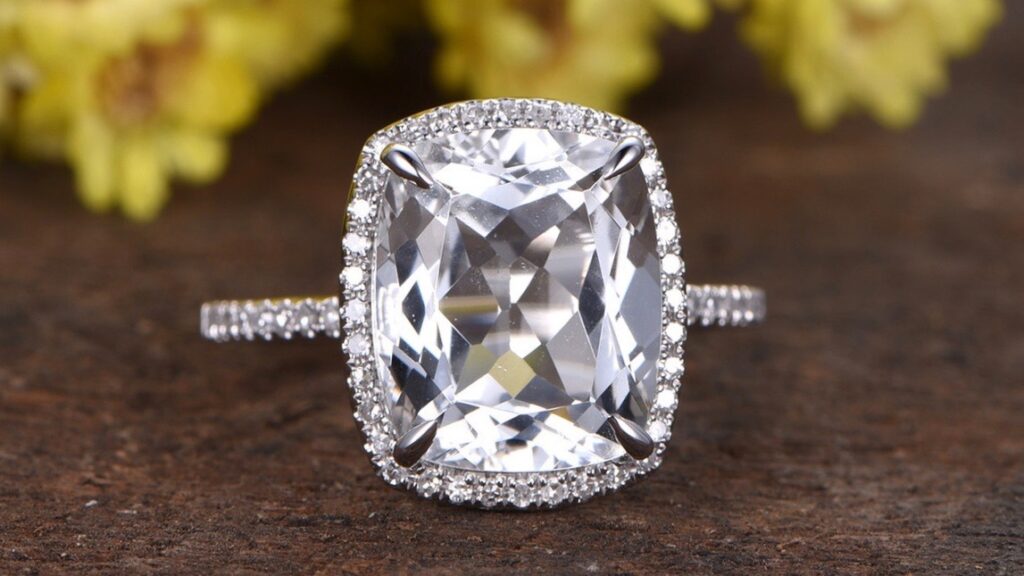
Use this chart as a starting point, then compare the exact stones you’re considering. If you still need help, email us here and we’ll help you weigh the trade-offs.
| Material | Type | Appearance and fire | Mohs | Toughness and care | Origin | Relative price | Best for |
| Laboratory-grown diamond | Diamond | Diamond optics with white light, fire, and scintillation | 10 | Very hard; edges can still chip | Laboratory-grown | $$$$ | Closest match and daily wear |
| Moissanite | Simulant | More rainbow fire than diamond | 9.25 | Very durable with routine care | Laboratory-created silicon carbide | $$ | Maximum sparkle and daily wear |
| White sapphire | Simulant | Soft white sparkle with less fire | 9 | Excellent toughness and no cleavage | Natural corundum | $$ to $$$ | Natural colorless gemstone |
| White topaz | Simulant | Cool gray-white sparkle | 8 | Poor toughness; use a protective setting | Natural topaz | $ | Value with mindful wear |
| Cubic zirconia | Simulant | Bright at first; can abrade over time | 8.5 | More prone to scratches and abrasion | Laboratory-created; not offered by Do Amore | $ | Temporary or occasional wear |
Good diamond alternatives solve different needs. The best diamond alternative depends on what matters most to you. Choose a laboratory-grown diamond for the closest overall match or moissanite for the most fire. White sapphire gives you a natural colorless gem with excellent toughness, and white topaz offers a more accessible fine-gem option that needs extra care.
Yes. Moissanite is a durable, laboratory-created gemstone with a Mohs hardness of 9.25 and more rainbow fire than diamond. It works well for everyday engagement rings. Its stronger flashes and occasional warmth at some angles give it a distinct look rather than a visual copy of diamond.
A laboratory-grown diamond is the closest option because it is a diamond with essentially the same chemical, physical, and optical properties as a natural diamond. Its origin, growth structure, and identifying features differ. Moissanite offers strong durability and high brilliance, but it remains a different material.
Laboratory-grown diamonds, moissanite, and white sapphires all suit everyday engagement rings when they are well set and cared for. White topaz can work with a protective setting and mindful wear, but its cleavage makes impact a bigger concern. GIA notes that cubic zirconia scratches more easily than diamond, so it is better suited to temporary or occasional wear.
Sure. Start with the look, daily-wear needs, budget, and sourcing details that matter most to you. Send us a note here, or email me here, and tell us what you want your ring to feel like. We’ll help you compare the options without pushing you toward one material.
Whichever stone you choose, every Do Amore purchase gives one person access to clean water. It is a quiet way for one treasured moment to create a ripple beyond the ring
Compare Do Amore’s diamond alternatives for engagement rings, including laboratory-grown diamonds, moissanite, and white sapphires side by side, then choose the stone that fits your preferred sparkle, daily-wear needs, and budget.