Your Bag Is Empty
Explore timeless jewelry that carries love and inspires lasting change
Every purchase gives one person access to clean, life-changing water.
Explore timeless jewelry that carries love and inspires lasting change
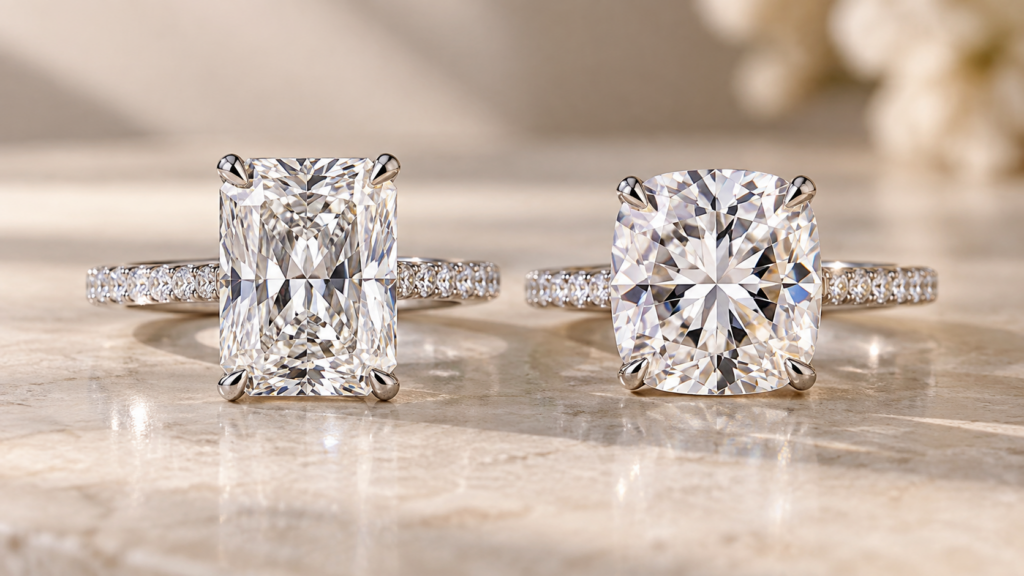
Radiant cuts feel crisp and geometric. Cushion cuts have a softer, more romantic outline. Either can be square or elongated, so compare the actual stones before choosing.
This radiant vs cushion cut guide covers sparkle, apparent size, color, clarity, durability, setting fit, and value without burying you in technical rules.
For a cushion cut diamond vs radiant comparison, start with the silhouette. Radiants have straight sides and clipped corners; cushions have softer curves and a pillow-like outline.
Facet patterns vary just as much. One stone may throw broad flashes; another may have a fine, crushed-ice look. Both shapes come square or rectangular. Compare millimeter measurements and videos at the same scale, even when carat weights match.
| Feature | Radiant | Cushion |
| Outline | Angular, clipped corners | Curved, rounded corners |
| Faceting | Step-style crown with brilliant pavilion facets | Brilliant or modified brilliant patterns |
| Light pattern | Often lively, splintery, or crushed-ice | Broad flashes or finer crushed-ice sparkle |
| Face-up spread | Often strong, especially when elongated | Varies; some stones carry more depth |
| Color and clarity | Depends on the exact facet pattern | Depends on the exact facet pattern |
| Durability | Cut corners avoid sharp exposed points | Rounded corners avoid sharp exposed points |
| Style | Crisp, modern, and architectural | Soft, romantic, and vintage-inspired |
| Best fit | Clean geometry and energetic sparkle | Gentle contours and flexible character |
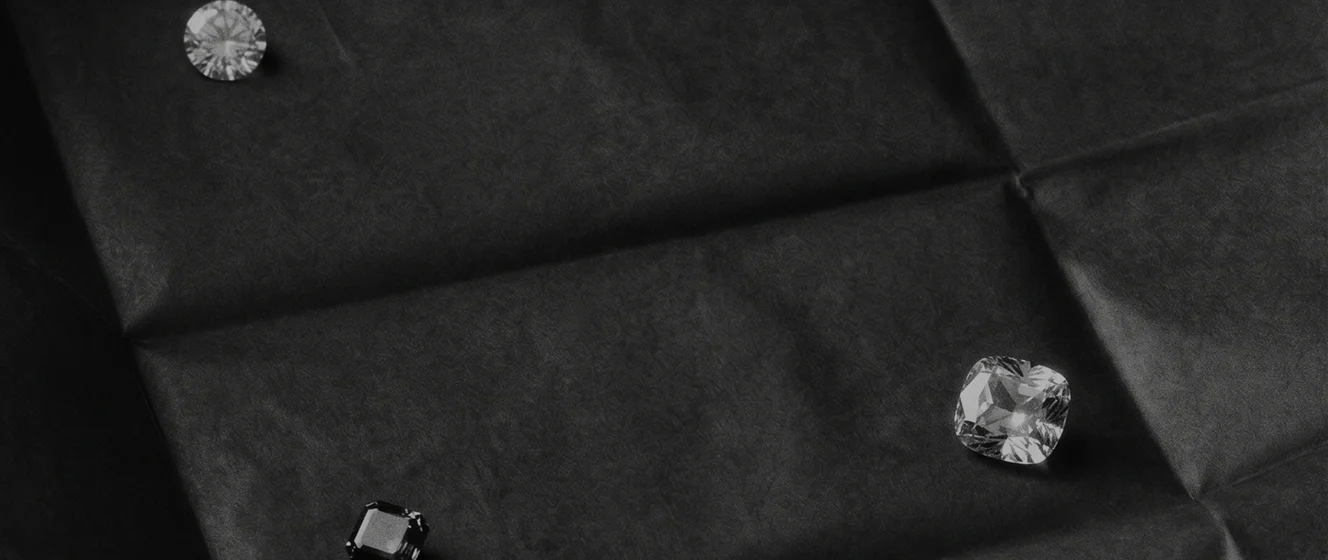
[IMAGE: Matched radiant and cushion cut diamonds or rings at the same carat weight, photographed from the same angle and scale.]
In a radiant cut vs cushion cut comparison, the outline sets the tone first. A radiant feels clean, tailored, and modern. A cushion looks gentler and more pillowy, with a shape that can lean vintage or contemporary once it’s set.
Faceting changes the mood too. Brilliance is the white light a diamond returns, and fire is the rainbow flash. Scintillation is the flicker you see when the stone, light, or viewer moves. Watch the size, pace, and contrast of those flashes instead of judging by shape alone.
Whether you compare mined stones or radiant cut lab grown diamonds, a radiant has an eight-sided outline and may be square or rectangular. Cropped corners soften the geometry, but the straight edges still give it a sharp, structured profile.
The cut combines step-style facets on the crown with brilliant facets on the pavilion. According to GIA’s radiant cut guide, proportions can vary considerably, so the outline, parallel sides, centered culet, and overall appearance of the individual stone matter more than a rigid formula.
Some radiants flash in long, splintery streaks. Others show a denser crushed-ice texture, often near the ends. Personal taste decides which pattern works. In a high-resolution video, look for brightness that feels balanced and check whether dark zones or patches of concentrated color keep pulling your eye.
You can see how this angular shape works in solitaire, halo, hidden halo, nature-inspired, side-stone, and three-stone designs in Do Amore’s radiant cut engagement rings. The collection is a useful visual reference even if you’re still deciding on the center stone.
In a radiant diamond vs cushion cut comparison, the cushion can be square or rectangular too, though curved sides and rounded corners give it that familiar pillow shape. Depending on its proportions and setting, the same outline can feel romantic, antique-inspired, or surprisingly modern.
“Cushion brilliant” and “modified cushion brilliant” describe broad families, and stones within either group can look very different. Traditional brilliant patterns can produce larger, chunkier flashes. Extra facets in a modified cushion may create a finer, more splintered texture.
GIA’s cushion cut guide explains that modern cushions may be square or squarish-rectangular with curved sides and rounded or pointed corners. That range is part of the appeal, and it makes stone-by-stone checks of outline symmetry and light pattern important.
Do Amore’s cushion cut engagement rings show how the same soft shape can move from a clean solitaire to a vintage-inspired halo or detailed side-stone design. Focus on the combinations that feel natural to the wearer rather than trying to choose a “correct” style.
Shape is only the first layer. Carat measures weight, so two diamonds with the same carat number can look surprisingly different from above. Length, width, depth, outline, and the setting all change what you see on the hand.
Color and clarity vary from one stone to another. Busy faceting can make certain inclusions harder to notice. Broad, open flashes may reveal characteristics more easily. Treat those as clues to inspect, never promises attached to a shape name.
Face-up spread is simply the visible length and width when you look straight down at the diamond. Those millimeter measurements tell you far more about apparent size than the shape label does.
To find the length-to-width ratio, divide the length by the width. A diamond measuring 7.5 mm by 6.0 mm has a ratio of 1.25. That number describes the outline. It can’t tell you whether the proportions look graceful or the diamond handles light beautifully.
Radiants and cushions range from nearly square to distinctly elongated. Extra length may give you more coverage across the finger. Extra depth can hide weight below the girdle. Put same-scale images, measurements, and videos next to each other, then check the shape on a hand with proportions similar to the wearer’s.
Skip the one-size-fits-all color and clarity rules. One radiant may gather warmth near an end. Another may look evenly bright. A broad-faceted cushion might reveal an inclusion quickly, yet a busier modified cushion could make a similar feature much harder to spot.
Read the grading report first, then watch the diamond move on video. Only some report formats include a plotting diagram. If a grade or visible feature leaves you unsure, an expert can help connect what’s on the report with what your eye sees.
Value gets personal here. A higher grade may matter less to you than a balanced outline, a light pattern you enjoy, and dimensions that suit the hand. Do Amore offers responsibly sourced, conflict-free natural and lab-grown diamonds, and the choice between them stays yours.
Neither shape keeps a permanent price advantage. A cushion cut vs radiant cut comparison changes with carat, color, clarity, craftsmanship, measurements, grading details, rarity, and current demand.
For a fair comparison, begin in the same carat range and keep the color and clarity grades reasonably close. Then look at face-up measurements, the grading reports, polish, symmetry, and the videos. A lower price loses its appeal if much of the weight sits in the depth or the light pattern leaves you cold.
Remember the setting when you compare budgets. A simple solitaire directs more of the spend toward the center stone. Cushion cut halo engagement rings can create extra presence around a smaller center. Side stones change the ring’s overall width and balance.
A fair radiant-versus-cushion price check compares the same diamond details, not carat weight alone.
Match the report number or, at minimum, the shape, carat, color, clarity, measurements, polish, symmetry, and grading lab. Then compare the setting and service terms separately. Do Amore reviews eligible price-match requests for like-for-like diamonds when the relevant GIA or IGI grading details align, so the comparison rests on the stone you would actually buy.
If two prices differ, ask which detail changed before assuming one is the better value. A lower total may reflect deeper weight, a different light pattern, or a different setting rather than a bargain.
Both shapes avoid the needle-like exposed points found on some fancy cuts. Diamond resists scratching exceptionally well, yet it can still chip. One hard knock in the wrong place may damage an edge or the girdle.
A secure setting protects the diamond while letting its outline do the talking. Prongs keep the profile open and show more of the clipped or rounded corners. A bezel covers more of the edge. Daily habits, the exact stone, and the design should guide that choice.
In a radiant vs cushion cut engagement ring comparison, setting style changes the visual message as much as the cut. Solitaires make the outline easy to appreciate. Halos add presence. Side-stone and three-stone settings can strengthen either a radiant’s clean geometry or a cushion’s romantic character. If your ideal combination falls outside a standard design, Do Amore’s custom rings process lets you shape those details around the stone.
An elongated cushion stretches the pillow shape without losing its soft corners and curved sides. An elongated radiant stays straighter and more architectural, with clipped corners that make the geometry easy to recognize.
Either shape can make the finger look longer. The effect shifts with the stone’s millimeter dimensions, band width, setting height, and the wearer’s hand. Elongated cushion cut vs radiant describes two families of silhouettes, with plenty of variation inside each one.
Put them side by side at the same scale. Notice where each stone carries its width, whether the corners feel balanced, and how the band meets the center. A video shot in similar lighting will tell you more than the ratio alone ever could.
Before choosing a radiant or cushion online, ask for the grading report, exact measurements, and videos shot under similar lighting.
Use the video to compare dark areas, color concentration, and the pace of the flashes. The same review applies to mined stones and cushion cut lab grown diamonds. Then check whether the outline stays balanced as the stone turns. Do Amore filters out diamonds with brown, green, or milky qualities (BGM), and its 30-minute video consultations let you review specific stones with the team before choosing.
Bring two finalists if you can. A side-by-side view helps you see which differences matter to your eye and which exist only on paper.
Lean toward a radiant if crisp geometry, straight edges, and an energetic light pattern keep catching your eye. A cushion makes more sense when you love softer contours, a pillowy outline, and flashes that feel broad, romantic, or vintage-inspired.
Now test that instinct against real stones. View them under similar lighting and in settings you’d genuinely wear. Use these questions to slow the decision down.
That last question matters more than any scorecard. A cushion vs radiant cut decision mixes technical judgment with gut response. The best value is a diamond you understand, feel confident buying, and still want to look at once the spreadsheet is closed.
These quick answers cover three trade-offs shoppers ask about most.
An elongated radiant may show more visible spread than a cushion with the same carat weight. Carat measures weight rather than visual size, so the result depends on each stone’s millimeter measurements and depth. Compare length, width, depth, and same-scale images before you decide.
A radiant may show a busy crushed-ice pattern, concentrated color, dark areas, or a visible bow-tie effect. These details vary by stone. Inspect the individual diamond on video instead of relying on a rigid ratio.
Some cushions carry extra weight in their depth, so they may look smaller from above than another diamond with the same carat weight. Broad facets can make warmth or inclusions easier to notice in certain stones. For another buyer, those proportions and slower flashes create exactly the soft, romantic look they want.
No shape wins every radiant cut diamond vs cushion comparison. The right radiant vs cushion cut choice is the diamond whose outline, light pattern, and proportions feel at home on the wearer’s hand. Do Amore’s short diamond guides can help you compare the two shapes. If two stones stay close, schedule a 30-minute video consultation to review the exact differences with the team.
A final side-by-side check in everyday lighting can confirm which stone still feels right after the first impression.
Whichever shape you choose, the meaning can extend beyond the ring. Every Do Amore purchase gives one person access to clean water, and you can follow the project your purchase supports. That gives one of life’s most treasured moments a quiet ripple beyond the proposal.