








Your bag is empty
Explore timeless jewelry that carries love and inspires lasting impact.
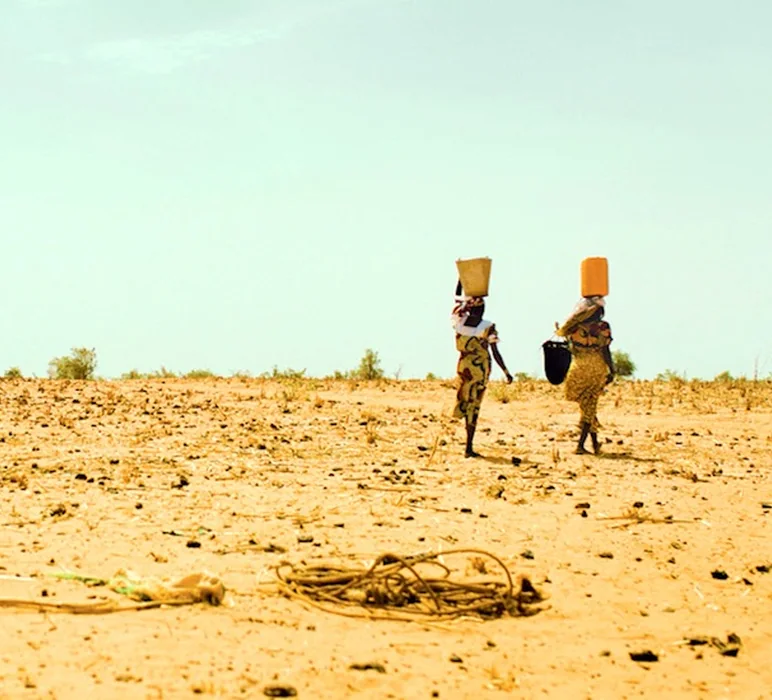
We promise that every purchase you make gives one person access to clean, life-changing water.
Explore timeless jewelry that carries love and inspires lasting impact.
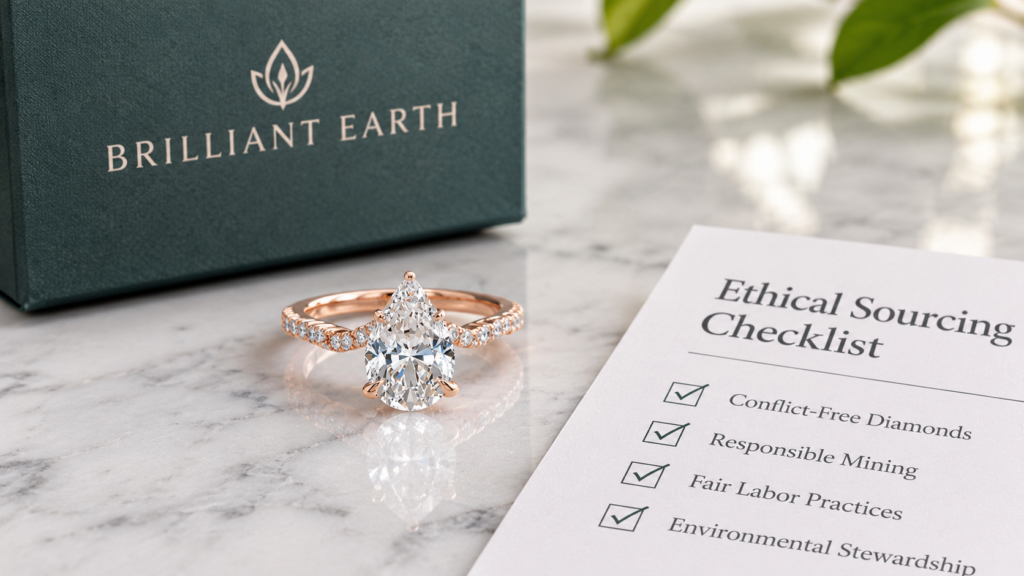
Brilliant Earth publishes detailed ethical-sourcing claims. Those claims still do not prove that every diamond meets the same standard across mining, cutting, labor, and environmental impact. Judge the exact stone and finished ring by the evidence attached to them, not by a company-wide label.
Before you buy, ask where the stone came from and request its chain-of-custody records, supplier checks, audit scope, and any corrective actions. For a lab-grown diamond, ask for the production facility and electricity source too. You can then compare Brilliant Earth with any other jeweler without asking one certificate to answer every question.
Brilliant Earth may be a reasonable choice if the evidence for a particular ring answers your questions. The brand name alone cannot do that work. Ethical sourcing reaches across conflict financing, labor rights, environmental impact, cutting and polishing, metal sourcing, and final manufacturing.
External ratings need the same careful reading. The current AIDI Trust Index says it judges jewelry houses on archived third-party evidence and does not pass verdicts on a company’s character. That makes an outside standing useful context, not proof of one diamond’s full history.
So the answer stays qualified. Brilliant Earth says it applies standards beyond basic conflict controls. You still need records that connect those standards to the exact stone and ring you are considering.
Brilliant Earth’s ethical claims reach across several parts of a ring, and the proof should match each part. Origin records for a natural diamond say nothing about the electricity behind a lab-grown stone. Metal documentation says nothing about conditions in a cutting facility. Even a strong charitable program cannot replace missing chain-of-custody records.
Break each claim into questions you can verify. What does it cover? Which supplier or facility does it apply to? Who checked it, and how recently?
“Beyond Conflict Free” is a Brilliant Earth label that AIDI records as one of the company’s published commitments, so buyers should ask what requirements the label adds and how they apply to the selected stone.
Strong evidence names the country, mine, producer, or traceability program when that information is available and follows the stone through trading, cutting, grading, and retail. If the answer stops at “responsibly sourced” without documents or defined criteria, it lacks enough detail to evaluate the claim.
Lab-grown describes how a diamond was made, not whether its production was automatically ethical or low impact. The electricity source, facility location, production method, efficiency, and reporting boundary all affect an environmental claim.
The FTC’s Green Guides warn against broad, unqualified environmental claims such as “green” or “eco-friendly.” Associated Press reporting found that lab-grown production can be energy intensive and that manufacturers vary in their use of fossil-fuel and renewable power. Ask for facility-level information tied to a stated reporting period, not a general claim about lab diamonds as a category.
Do Amore’s lab-grown environmental guide offers more detail on the questions to ask. The tradeoff is simple. Lab-grown avoids a new diamond mine, but its energy evidence still deserves scrutiny.
Recycled metals and ring manufacturing need evidence separate from the diamond’s sourcing records. Review the ring’s gold or platinum, cutting, polishing, and final assembly as distinct supply chains.
For recycled metal, ask for the percentage claimed, the supplier or refiner, and the standard used. For manufacturing, find out which facilities and workers an audit covered. Specific, bounded claims tell you far more than a broad sustainability label.
Conflict-free is a narrow starting point. Ethical sourcing asks wider questions about people, places, and processes. A diamond can meet a conflict control and still leave labor, environmental, or custody questions unanswered.
Conflict-free still carries useful meaning within its limited scope. The label answers one question and should not be stretched into an answer for every other issue.
The Kimberley Process controls the import and export of rough diamonds between participating countries. Global Witness explains that its definition focuses on rough diamonds used by rebel movements to finance wars against legitimate governments.
That boundary matters. The process does not certify the full history of a polished diamond or finished ring, and it does not settle every labor or environmental question. Once conflict controls are confirmed, follow the stone beyond the rough-diamond trade with custody and due-diligence records.
Human-rights due diligence adds an ongoing process for finding, addressing, checking, and reporting supply-chain risks. OECD’s five-step framework covers management systems, risk identification, risk response, independent auditing at key control points, and public reporting.
The RJC Code of Practices separates business-partner controls, human rights, sourcing due diligence, claims, labor conditions, environmental management, and product disclosure. A certificate needs a defined scope. Ask which entity, locations, suppliers, and dates it covers, then check whether findings and corrective actions are available.
Build a short evidence chain before you pay a deposit. Begin with the stone’s identity and origin, then follow its custody records and supplier checks. Finish by reading the audit scope, any relevant energy evidence, and the documents for the rest of the ring.
The FTC’s buying guidance recommends asking about a diamond’s origin and whether a seller uses testing to distinguish natural and lab-created stones. Do Amore’s conflict-free diamond guide can help you prepare follow-up questions, but the jeweler’s answer still needs to match the exact stone.
Ask the jeweler to identify the country, mine, producer, or traceability program for the selected stone when that information exists. Then follow the paper trail through each stage that came after.
A standard grading report usually describes identity and quality. GIA explains that its ordinary grading report covers the 4Cs and identifying characteristics, and a separate Diamond Origin Report includes geographic origin for eligible stones analyzed from the rough stage. Do Amore’s diamond certification guide can help you read the report, but the grading document should not be treated as a complete ethical audit.
An audit helps only when its scope is clear. Ask who performed it, which legal entity and facilities were included, what standard was used, and when the work took place.
Then read the coverage. Did the review address labor, human rights, environmental management, chain of custody, or a much narrower management system? A current certificate with a clear scope is more useful than an expired badge or a score with no readable method.
For a lab-grown diamond, ask for the production facility, growth method, electricity source, reporting year, and independent review. National grid data adds context, but it cannot tell you what powered one facility.
Compare like with like. A figure measured only at the growth chamber cannot be fairly set against a mining figure that includes transport, cutting, and polishing. Different boundaries produce numbers that answer different questions.
Check the whole ring as carefully as the center stone. Look at the metal, manufacturing, packaging, repair options, and expected durability. An ethical diamond claim remains incomplete when the setting and production process sit outside the evidence.
The tradeoffs become clearer here. For a recycled gold engagement ring, require a defined recycled-content percentage and supplier standard. For durability, ask how the setting is built and maintained. Neither claim establishes whether the original supply chain was ethical.
Give-back impact can add a meaningful purchase benefit, but it should remain separate from diamond sourcing proof. Do Amore’s role in this decision is to offer natural and lab diamond options for comparison, not to audit either supply chain. Its Impact page states that every purchase provides clean-water access for one person and that the buyer receives project updates and GPS coordinates.
The program gives you a separate result to track after buying a ring. It says nothing about the diamond’s origin, labor conditions, chain of custody, or environmental footprint. Keep the decisions separate. Apply the same sourcing checklist to each natural or lab option, then weigh the clean-water project as an added purchase impact.
Use the same questions with every jeweler. That makes it much easier to compare evidence instead of slogans.
A useful answer names documents, dates, facilities, and scope. Vague language such as “responsible” or “sustainable” leaves those details out. Save the written responses, then compare the same evidence categories across rings.
Choose a ring only when you can follow the evidence from claim to document. Labels help when they define their scope. Audits help when they name the people, places, and dates reviewed. Origin records matter when they connect to the stone in front of you.
If you are still weighing stone types, Do Amore’s lab-grown and natural diamond guide explains the main differences without making either option the automatic winner. If your concern has shifted from one stone to the retailer itself, the Brilliant Earth alternatives guide provides a separate route for comparing shopping options.
If you are still asking whether Brilliant Earth diamonds are ethical, a perfect one-word verdict is unlikely. You can still make a confident choice when the record is clear about what is known, what remains uncertain, and which tradeoffs feel right for you. When you are ready to compare rings, start with Do Amore’s natural and lab options, apply the same sourcing checklist to each one, and treat the clean-water contribution as a separate purchase benefit.