Your Bag Is Empty
Explore timeless jewelry that carries love and inspires lasting change
Every purchase gives one person access to clean, life-changing water.
Explore timeless jewelry that carries love and inspires lasting change
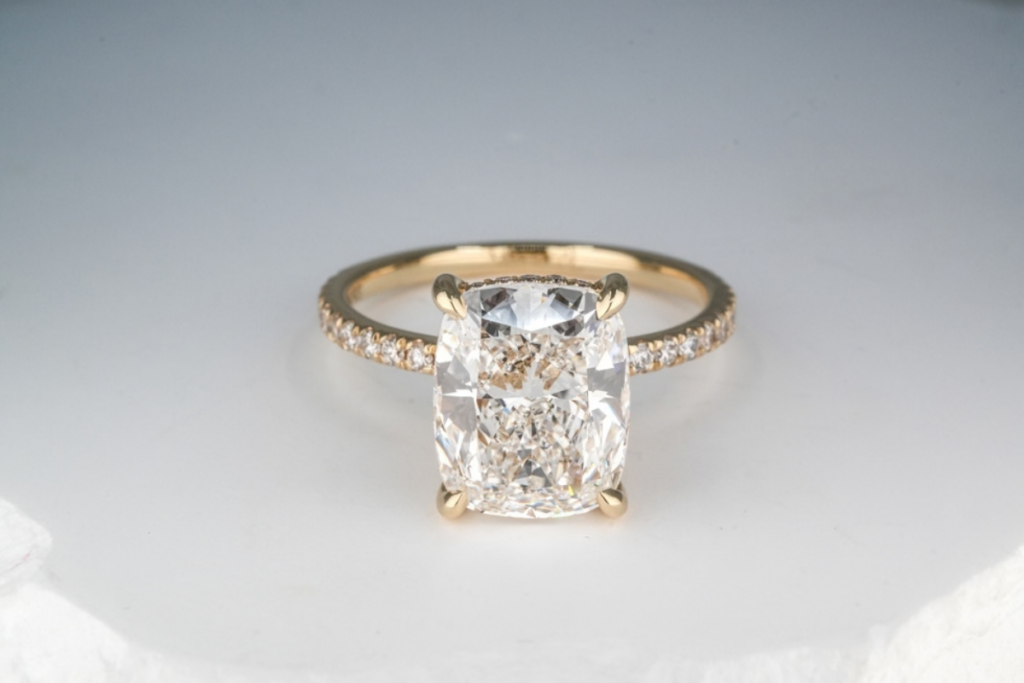
Lab-grown diamonds can be better for the environment because growing them avoids the need for a new diamond mine. That removes direct land disturbance, habitat loss, and mineral waste tied to extraction. Carbon is less straightforward because the footprint changes with the growth method, factory efficiency, electricity source, and lifecycle stages counted.
A label alone offers too little evidence. Compare energy, emissions, land, water, waste, biodiversity, traceability, and the metal setting. The sections below show how to compare these factors without leaning on vague green claims.
Often, yes. For shoppers comparing lab diamond engagement rings, a stone made in an efficient facility with well-documented, lower-carbon electricity can carry a smaller footprint. And because no new diamond mine is needed, it avoids direct excavation, overburden, tailings, and disruption at a mine site.
Energy is the catch. Diamond growth needs industrial equipment and tightly controlled conditions for hours or days at a time. Put that process on a fossil-heavy grid and the climate footprint can climb sharply.
Land disturbance and mineral waste are where lab-grown diamonds show the clearest category-level advantage. Carbon is more complicated. The grower, production method, power source, yield, and study boundary can all change the result.
A specific facility report, tied to a clear year and method, tells you far more than a category-wide slogan. Ask for that evidence.
Lab-grown diamonds are real diamonds created by replicating the conditions in which carbon crystallizes. The environmental impact of lab-created diamonds starts with industrial production rather than mineral extraction. The two main methods are chemical vapor deposition (CVD) and high-pressure, high-temperature (HPHT) growth. GIA’s explanation of HPHT and CVD processes shows that both start with a diamond seed, but they build the crystal in different environments.
Growth is one stage in a longer supply chain. The rough stone still moves through cutting, polishing, grading, shipping, and setting. The metal around it carries its own footprint.
Comparisons that stop at the growth chamber or mine gate leave those shared steps out.
Yes. Lab-grown diamonds are real diamonds with the same chemical composition and crystal structure as natural diamonds. The difference is their origin. Do Amore offers lab-grown stones alongside responsibly sourced, conflict-free natural diamonds, so the choice can stay focused on your values, budget, and the evidence for a specific stone. A grading report helps verify quality and identity, but environmental claims need separate support.
A CVD diamond begins as a thin seed inside a vacuum chamber filled with carbon-containing gas. Energy turns the gas into plasma, and carbon settles onto the seed layer by layer. Growth may require several cycles, cleaning between runs, and close control of heat and pressure.
Electricity can carry much of the environmental weight. Reactor design, run time, yield, and the local power mix all change emissions per usable carat. Some CVD diamonds receive HPHT treatment after growth to improve color, which adds another production step.
HPHT starts with a diamond seed, a carbon source, and a metallic flux inside a powerful press. Heat and pressure dissolve the carbon, which then crystallizes around the seed. Press design, growth time, batch size, yield, and energy source all shape the result.
A CVD vs. HPHT energy-use comparison needs facility-level data because production method alone reveals little about which stone has the smaller footprint. An efficient HPHT operation may use less electricity per carat than an older CVD reactor. Two facilities using the same process can report very different results.
Ask who made the stone, what powered the equipment, and which reporting period the data covers.
Avoiding a new mine removes several direct impacts. Lab growth removes the need to excavate ore, strip overburden, or store tailings at a diamond mine. It avoids the direct conversion of land and habitat tied to open-pit, underground, alluvial, coastal, or marine extraction.
A 2024 study in Humanities and Social Sciences Communications modeled greenhouse gas emissions, mineral waste, and water use across the diamond industry. Its scenarios point to meaningful potential reductions from lab-grown production, especially under cleaner-energy pathways. The authors relied partly on older industry inputs, so the findings are better used to understand direction and conditions than to label every stone.
Lab-grown diamond water usage is trickier than it first appears. A lab may use water for cooling, often with some recirculation. A mine may need it for extraction, ore processing, dust control, and other work. The result changes with the system design, mine type, local conditions, recycling, and study boundary.
Lab-grown diamond production has impacts beyond the factory floor. Electricity generation, machinery, process gases, and facility construction all carry environmental costs. Avoiding excavation matters, but the finished stone never has a zero footprint.
Those impacts may occur far from the lab. Power generation may use land and water elsewhere. Machinery and process gases have their own supply chains.
A credible lifecycle assessment includes those boundaries instead of treating the growth chamber as an isolated box.
Two lab-grown diamonds of the same size and quality may have very different climate footprints. The local grid, renewable-power contract, reactor efficiency, growth time, failed runs, and usable yield can each move the number.
That variability is why a lab-grown diamond’s carbon footprint cannot be inferred from its label. Terms such as green, eco-friendly, sustainable, and carbon neutral should prompt questions. The FTC’s Green Guides warn against broad, unqualified environmental claims and call for clear, specific support. A claim is only useful when you can see what it covers.
Operational emissions come down to the energy used for growth and the carbon intensity of that power. A CVD facility on a coal-heavy grid will often produce a very different footprint than a facility using verifiable, lower-carbon electricity, even when the reactors look similar on paper.
A country name proves little about a facility’s power mix. One producer may run on grid electricity, another on onsite solar, and a third on a dedicated contract or certificates. Ask for facility-level data tied to a reporting year, growth method, functional unit, and lifecycle boundary.
Failed runs count. So does material that never becomes a saleable gem. Good reporting shows how those losses were allocated instead of dividing energy use only across a facility’s best-performing output.
Renewable energy for lab-grown diamonds may come from onsite generation or a dedicated supply contract. Renewable-energy certificates match electricity use with renewable generation elsewhere. Carbon offsets deal with emissions after they occur by funding reductions or removals. Read the fine print.
Useful claims answer a few basic questions. Which facility, energy source, and reporting period are covered? Which lifecycle stages count, and did an independent party review the figures?
A seal without that context says far less than a clear report.
Certification status can change. The SCS-007 program was retired effective Sept. 1, 2026. Companies certified before that date may continue to use their certification through its existing expiration date. If a seller presents SCS-007 certification, check its scope and expiration instead of treating the program as a current standard.
Start by lining up like with like. Use the same unit, year, and lifecycle boundary for both stones. Comparing a rough carat with a polished carat, or mine-gate data with a full product lifecycle, may produce a tidy percentage that tells you very little.
Whether lab-grown diamonds are ethical is a separate question from whether they have a lower environmental footprint. Ethical considerations include labor conditions, community benefits, conflict risk, and local employment. Environmental data covers energy, water, waste, and land, and a carbon figure answers only one part of the broader decision.
| Impact area | Lab-grown diamonds | Mined diamonds |
| Energy and carbon | Highly variable; driven by growth method, efficiency, yield, and electricity source. | Variable by mine type, operations, fuel, and electricity mix. |
| Land disturbance | No new diamond mine is required. | Extraction can disturb land directly; scale varies by mine type. |
| Mineral waste | Avoids ore, overburden, and tailings from diamond mining. | Can generate overburden, waste rock, and tailings. |
| Water | Used mainly for cooling; recirculation and system design matter. | Used in extraction and processing; mine and local conditions matter. |
| Biodiversity | Avoids direct mine-site habitat disruption. | May affect terrestrial, river, coastal, or marine habitats. |
| Traceability | Can be facility-specific when producer data and chain of custody are available. | Can be mine-specific when origin and chain of custody are documented. |
| Shared downstream steps | Cutting, polishing, grading, shipping, packaging, and setting still apply. | Cutting, polishing, grading, shipping, packaging, and setting still apply. |
Evidence for low-carbon lab-grown diamonds must be compared on a like-for-like basis. A 2021 comparative analysis of energy and water use found wide differences among HPHT, CVD, and mined-diamond examples. Some mining operations in the study used less energy per rough carat than the CVD setup the researchers tested. The HPHT setup used less energy than the tested CVD setup. Those same variables matter when weighing recycled diamonds and newly mined diamonds, because the sourcing route changes the kind of impact being compared. The study shows how method, equipment, and assumptions can change the ranking.
Published numbers vary for good reason. Researchers may measure rough or polished carats, a single facility or an industry average, operational electricity or a wider lifecycle, and current or older technology. Compare only figures built on the same basis, and favor producer-specific data when it is available.
For a broader buying comparison beyond environmental impact, Do Amore’s guide to lab-grown and natural diamonds explains how the two choices differ in price, origin, and other practical considerations.
The environmental impact of diamond mining is clearest in land disturbance and mineral waste. Lab-grown production requires no new diamond-bearing material to be excavated, which reduces pressure on mine-site habitats. The size of that benefit varies because surface, underground, alluvial, and marine mines affect land and ecosystems in different ways.
Water refuses a tidy verdict. Mining and lab growth can both use it, and local scarcity matters alongside volume. A liter withdrawn in a water-stressed region has a different consequence from a liter drawn and recirculated where water is abundant.
Both choices then move through many of the same downstream steps. Cutting, polishing, grading, transport, packaging, and the precious-metal setting all belong to the finished ring’s footprint. Recycled precious metals can reduce demand for newly mined metal, but that benefit should remain separate from claims about the diamond.
Yes. In engagement rings, the setting belongs in the footprint because its metal must be sourced, refined, shaped, and transported. Do Amore uses recycled precious metals, so the metal is already above ground and no new extraction is required for that part of the ring. Compare the setting and center stone separately, then bring both into your final decision.
Responsible diamond sourcing starts with questions about the stone in front of you. A transparent producer or jeweler should be able to tell you where it came from, how it was grown or mined, and exactly what any environmental claim measures.
Those questions turn a broad environmental debate into a conversation about one stone. They expose the difference between a facility-specific claim and a polished category average.
Complete records are rare in a complex supply chain. What matters is whether the seller separates verified facts from estimates, explains the gaps, and resists turning uncertainty into a sweeping promise.
Each of these signs calls for more detail. Specific, current evidence gives you a basis for comparison. A green label offers little on its own.
Do Amore carries both lab-grown diamonds and responsibly sourced, conflict-free natural diamonds. That leaves room for an honest conversation about the trade-offs, without nudging you toward one category. You can choose based on your values, budget, and the evidence available for a particular stone.
The center stone is only part of the ring. Do Amore uses recycled precious metals, filters out diamonds with brown, green, or milky qualities (BGM), and applies clean-energy prioritization when selecting diamonds. Those are specific parts of the brand’s approach, without making a blanket promise that every option carries the same footprint.
Every purchase helps fund lasting clean-water access for one person, and couples receive details about the project they supported. That clean-water impact is meaningful in its own right. Keep it separate from claims about a diamond’s manufacturing footprint.
Keeping those ideas separate makes the choice clearer. Judge the diamond by its sourcing and production evidence. Look at the setting for the material choice, and consider the clean-water project for the impact it creates.
When you compare lab-grown diamonds’ environmental impact, avoiding many direct mining-related impacts is a meaningful advantage. They can carry a lower climate footprint when an efficient facility runs on well-documented, lower-carbon electricity. The strongest choice is the one backed by clear, current information about the stone in front of you.
Do Amore keeps the diamond evidence and the clean-water impact separate. Every purchase helps fund lasting clean-water access for one person, and you receive details about the project your ring supported. Use the questions above instead of relying on a universal verdict. If lab-grown fits your priorities, explore Do Amore’s lab diamond engagement rings or contact the team for help comparing origin, grading, and available sourcing information. Your ring can reflect what matters to you, with evidence behind the choice.