Your Bag Is Empty
Explore timeless jewelry that carries love and inspires lasting change
Every purchase gives one person access to clean, life-changing water.
Explore timeless jewelry that carries love and inspires lasting change
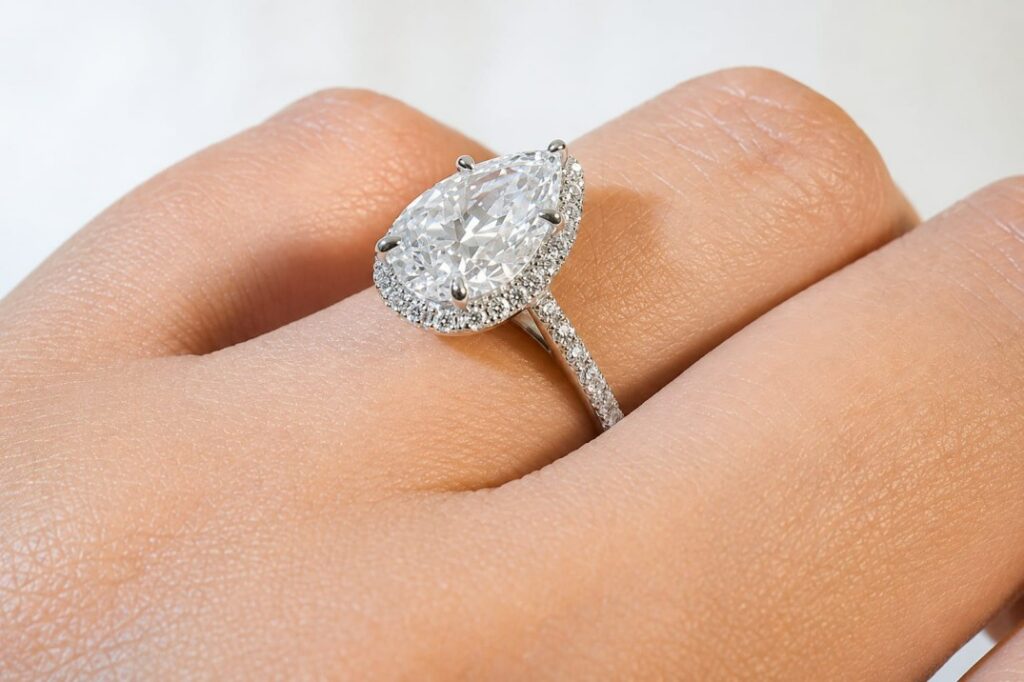
You want a ring that marks one of life’s most treasured moments without a shadow hanging over it. So the question is fair and important. When a diamond is called conflict-free, does that label mean what you hope it means? The short answer is that conflict-free is a real term with a specific, narrow definition, which makes it a solid starting point rather than a full guarantee.
This guide explains what conflict-free actually covers, what it quietly leaves out, and the simple steps you can take to be sure the diamond you choose is genuinely responsibly sourced. No jargon, no scare tactics, just a clear way to buy with confidence.
Conflict-free describes rough diamonds that rebel groups did not sell to finance violence or human rights abuses. That is the specific harm the term was created to address, and it helps to know the boundary of the promise.
The definition comes from the international system built to stop “blood diamonds,” using the wording of the US State Department and the Kimberley Process. Under that framework, a conflict diamond is a rough stone whose sale funds armed rebellion against a recognized government.
The honest part most marketing skips is simple. The label speaks to rebel war financing, not to labor conditions, environmental impact, or every hand a stone passed through. That does not make it meaningless. It makes it one layer of a bigger picture, which is why the rest of this guide focuses on how to verify the specific stone in front of you.
If you have felt a flicker of worry about whether your diamond is ethical, that instinct is healthy, and you are not being paranoid. The reassuring news is that the answers are easy to ask for, and a trustworthy jeweler will give them to you plainly.
Conflict-free and ethically sourced are not the same claim. Shoppers use them interchangeably, but the two words promise different things. Conflict-free is the narrow term you just read about, a rough diamond that did not finance rebel warfare. Ethically sourced is broader, weighing labor conditions, environmental impact, and how openly a seller can account for a stone’s path. A diamond can be fully conflict-free and still leave those wider questions open.
That difference is why the words a jeweler uses matter. Do Amore describes its diamonds as both responsibly sourced and conflict-free, and treats conflict-free as the baseline, not the whole story. The practical move for a first-time buyer is easy. Ask which of the two a seller means, and favor one who can answer for both without dodging.
The Kimberley Process is the international certification scheme that polices conflict diamonds. Launched in 2003 under the Clean Diamond Trade Act, it now brings together more than 80 countries that agree to certify shipments of rough diamonds as conflict-free when they cross borders.
It exists for a real reason, and it worked. Before the scheme, rebel-financed diamonds moved more freely through the global market. The Kimberley Process sharply cut that flow, and that progress deserves fair credit rather than a cynical dismissal.
But it has a clear limit, and understanding it is the key to shopping wisely. The scheme certifies border shipments of rough diamonds, not the working conditions behind them or the full journey of a single finished stone. So the certificate covers the trade at a high level. It does not, on its own, tell you the complete story of your diamond, and that gap is exactly what you can close as a buyer.
Yes, conflict-free diamonds are real, and they are the norm rather than the exception. By the industry’s own measure, about 99% of diamonds in the marketplace are conflict-free, a figure reported by GIA. For a nervous first-time buyer, that is genuinely reassuring.
It helps to know what the number measures. That 99% reflects the narrow definition, meaning stones that did not finance rebel warfare. It does not, by itself, speak to labor practices or the smugglers and middlemen a stone may pass through. None of that is an accusation. It is simply the difference between a broad statistic and the single stone you are about to buy.
So hold both facts at once. The figure is real and encouraging, and it is also why a careful buyer looks past the blanket label to verify the specific diamond. That is easier than it sounds, and it is where we go next.
The practical way to verify a diamond is conflict-free is through a short, calm checklist you can actually use. None of these steps require special expertise, and none of them should make a good jeweler uncomfortable. If anything, asking these questions signals that you are a thoughtful buyer.
Think of the four steps below as layers of confidence. Each one adds a little more certainty, and together they turn “I hope so” into “I know.”
Start with the simplest question. What can you tell me about this stone’s journey? This is chain of custody in plain terms, and the more a seller can share, the more confidence you have. Transparency is a green flag. Vagueness is a yellow one.
Some sourcing programs can track a stone back to a specific mine or country of origin, which answers the origin question directly. You do not need a documentary made about every stone. You just want to see that the seller knows where their diamonds come from and will tell you.
The diamond trade uses a tool called the System of Warranties. It is an assurance passed along the invoices at each step of the supply chain, stating that the diamonds are conflict-free and comply with the Kimberley Process. You can simply ask a jeweler whether their diamonds carry this warranty, and it is a normal, answerable question.
Be clear-eyed about what it is, though. A warranty is a paper assurance, a promise recorded on an invoice. That is useful, and it is also why thoughtful buyers pair it with the next two steps rather than stopping here.
Modern traceability programs go a step further than a border certificate. Some log a stone’s steps from origin to setting, and a growing number use blockchain records to make that trail tamper-resistant. The benefit is transparency you can actually follow.
The honest caveat is that coverage varies by program and by stone, so not every diamond will have this level of tracking yet. If maximum confidence matters to you, a traceable stone is a strong option worth asking for. Just do not expect it to be universal.
An independent grading report from a lab such as GIA or IGI confirms a diamond’s identity and whether it is natural or lab-grown. It records the stone’s exact combination of weight, measurements, proportions, and other details, which together act like a fingerprint for that one diamond.
One distinction matters here. A grading report proves identity and quality, not sourcing ethics. It will not, by itself, tell you a stone is conflict-free. What it does is let you match a specific diamond to its specific sourcing paperwork and rule out any substitution along the way. On a purchase this significant, that link between the stone and its story matters.
A conflict-free diamond is only part of an ethical ring, since the metal band has a supply chain of its own. Newly mined gold and platinum raise the same kinds of labor and environmental questions people ask about diamonds. A similar reuse-versus-extraction question comes up when comparing recycled diamonds and newly mined diamonds. One clean answer is recycled precious metal, which reuses gold and platinum already above ground and puts no new demand on mining.
This is where a jeweler’s standards show. Do Amore sets its responsibly sourced diamonds in recycled precious metals, so the whole ring, not just the stone, carries the same care you have been checking for. With the band accounted for, the diamond itself gives you a few honest routes to weigh.
There is no single right answer here, only the right answer for you. Each of the three routes below can be genuinely conflict-free, and each carries its own trade-offs in price, look, and story. The goal is to help you choose, not to push you toward one.
Read them as options on a table, not a ranking. A stone that feels perfect to one couple leaves another cold, and that is exactly how it should be.
A natural diamond backed by strong origin documentation gives you a mined stone with a clear, followable history. For buyers who love the idea of a gem formed in the earth over billions of years, this route keeps that romance and still answers the sourcing question.
Verification matters most on this path, so lean on the transparency and origin-tracking programs described above. When a natural stone comes with detailed sourcing, you get the best of both, the story you want and the confidence you need.
A lab-grown diamond is chemically and structurally a real diamond, grown above ground rather than mined. It shares the exact makeup of a mined stone and is not a simulant or an imitation, just a diamond produced in a controlled setting instead of formed deep in the earth.
The practical appeal for many buyers is straightforward. Lab-grown has no mining supply chain to trace, and the stones often offer great value for size. A trustworthy seller will always tell you plainly when a diamond is lab-grown, so you know exactly what you are choosing. It is one strong option among several, not the automatic answer.
The third route is one almost no one talks about, a recycled or vintage diamond. This is a previously owned or reclaimed stone, which means it places no new demand on mining at all. For some buyers, giving an existing diamond a new chapter is the most meaningful choice of all.
The trade-off is availability. Each recycled or vintage stone is unique, so you are shopping for one-of-a-kind pieces rather than picking from endless matching options. When you find the right one, though, it is a legitimate and genuinely ethical path alongside the other two.
Not really. Because roughly 99% of the market is already conflict-free, buying a conflict-free diamond is the standard, not a premium you pay extra for. In almost every case, the affordable diamond and the ethical one are the same stone, so you are not trading one for the other.
Real cost differences come from elsewhere. Added traceability or single-origin programs can carry a small premium for the extra documentation, and lab-grown diamonds often deliver great value for size. Where your money goes is a choice, and none of these options asks you to overpay to shop responsibly.
If your worry is the classic “am I overpaying?”, Do Amore offers concrete reassurance. It matches pricing on a like-for-like diamond with the same GIA or IGI certification, so you can shop knowing the value is fair on a comparable stone. That takes the guesswork out of whether you found a good price.
If conflict-free is the floor, responsible sourcing is what gets built on top of it. The deeper question lives here. Not just whether a stone avoided the worst harm, but whether the diamond is something you can genuinely feel good about. The best answer comes from a jeweler whose standards go well past the minimum.
Do Amore is built around that higher bar. Every ring uses responsibly sourced, conflict-free natural and lab-grown diamonds set in recycled precious metals. The company filters out diamonds with brown, green, or milky qualities (BGM), and it uses clean-energy prioritization when selecting stones. These are specific practices, not vague promises.
One more thing sets these rings apart, and it is the heart of the brand. Every Do Amore purchase funds clean water for someone in need, an idea born when founder Krish Himmatramka, an engineer on oil drilling rigs, realized the same technology could bring clean water to communities that lacked it. He later brought that mission to Shark Tank. The promise is simple. Turn Diamonds into Water. Choose a ring, build a well.
Pull it all together and the worry gets much smaller. The conflict-free label is a real and reassuring starting point, verifying a specific stone is simple, and a genuinely conflict-free diamond is well within your reach. You now know exactly what to ask and what to look for.
When you are ready, you can explore Do Amore’s conflict-free natural and lab-grown engagement rings, where both options sit side by side so you never feel pushed toward one. If you would rather talk it through, reach out for one-to-one guidance on matching a responsibly sourced stone to what matters most to you. Take the next step because you understand the choice now, and because you know it is a good one.