Your Bag Is Empty
Explore timeless jewelry that carries love and inspires lasting change
Every purchase gives one person access to clean, life-changing water.
Explore timeless jewelry that carries love and inspires lasting change
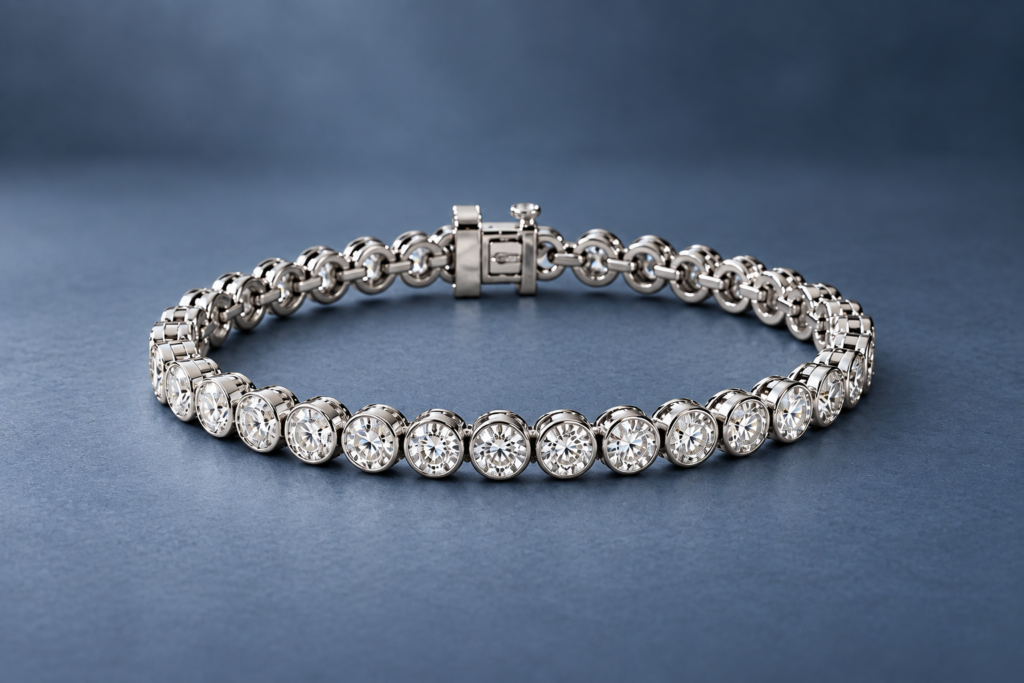
Do lab-grown diamonds hold their value? Usually not in the financial sense. Lab-grown diamonds often lose a significant share of their retail price on resale. You may be able to sell one, but the offer will reflect what a comparable new stone costs now, not what you paid years ago. The diamond itself remains real, durable, and meaningful even when its market price changes.
That distinction matters. Before you buy, separate the price today from a future resale offer, an insurance replacement estimate, and the value you get from wearing the ring. Each number answers a different question.
In financial terms, lab-grown diamonds rarely retain much of their original retail price. Production has expanded, technology has improved, and comparable new stones have become more affordable. A secondhand buyer starts with today’s new-stone price, then leaves room for inspection, inventory risk, and resale costs.
Still, no single lab-grown diamond resale value percentage applies to every stone. The stone’s size, cut, condition, grading documents, current demand, setting, and selling channel can all change the offer. If future resale matters to your budget, compare lab diamond engagement rings by their current total price, then treat future proceeds as uncertain.
The word value causes a lot of confusion because it sounds like one fixed number. For a diamond ring, it can describe several very different things. Knowing which one you mean makes every comparison easier.
Retail value is the price you pay the jeweler. It covers the center stone and may include the setting, side stones, recycled precious metal, design work, quality checks, service, shipping, returns, and the retailer’s operating costs.
Resale value is what someone will pay after you own the ring. A dealer usually needs room for inspection, possible repairs, time in inventory, and profit. A private buyer may offer more, but reaching that buyer takes work and brings its own payment, shipping, and trust concerns.
Replacement value serves a different purpose. It estimates what a comparable item might cost to replace, often for insurance. GIA explains why a grading report is not an appraisal and does not assign a cash value to the diamond.
Some value never appears in an offer. The memory of the proposal, the person who gave you the ring, and the life you build while wearing it belong to you. A resale buyer cannot price that connection.
Daily wear has value too. If a lab-grown diamond gives you the size, cut, or setting you love at a comfortable price, years of daily wear may matter far more than a possible sale decades from now. This is another way to think about lab-grown diamond value over time: what you use and enjoy, not only what you might recover. That is a personal choice, and it is worth naming honestly.
Resale value should be one part of a lab-grown diamond decision, not the whole decision.
Start with the dollars you could lose, not only the percentage. A lower purchase price can mean fewer dollars at risk, even with a smaller resale percentage.
Do Amore lets you compare lab-grown and natural diamonds without steering you toward either origin. You can weigh cut, setting, total price, and the one-to-one clean-water impact against the chance you will ever sell the ring.
Lab-grown diamond prices have fallen sharply over time, though the movement is uneven across sizes and periods. Edahn Golan’s Q2 2026 Lab-Grown Wholesale Price List reported a 13% year-over-year drop in its overall index, but 1-carat lab-grown diamond prices for rounds rose 1%. Wholesale data should not be mistaken for a guaranteed retail or resale result, but it shows why one sweeping percentage misses the real story.
Lab-grown diamonds form through chemical vapor deposition (CVD) or high-pressure, high-temperature (HPHT) growth. Both methods create diamond crystal from carbon under controlled conditions. Do Amore’s guide to lab diamonds explains the basics without burying you in the science.
As equipment, yields, cutting plans, and production capacity improve, growers can bring more stones to market at lower cost. Natural diamond supply is limited by geology and the availability of suitable rough. Lab-grown supply can respond faster, which puts more pressure on new and used prices.
None of that changes what the stone is. A lab-grown diamond has the same carbon crystal structure as a natural diamond. Its market price moves because of supply and demand, not because the material is slowly becoming something else.
Current lab-grown diamond prices per carat can help frame a comparison, but a buyer still wants to know what a truly similar new stone costs today. That price acts as a ceiling. The buyer then subtracts for uncertainty, inspection, selling expenses, and the margin needed to make the transaction worthwhile.
Say someone paid $3,500 for a complete ring several years ago. If a comparable new center stone now sells for $1,500, a buyer will anchor below the current $1,500 figure rather than the old receipt. The setting may be valued separately. Those figures are illustrative, not a typical result or a forecast.
No universal estimate applies to every stone. Lab-grown diamond price history can add context, but two buyers may quote very different amounts for the same ring because their customers, costs, and tolerance for inventory differ. Published resale ranges tend to blur the center stone, setting, fees, original markup, and purchase date.
Your clearest estimate will come from several written offers. Ask each buyer what the quote includes and how long it remains valid. Check for fees, insured-shipping requirements, inspection conditions, and any deductions that could change the amount you receive.
Current comparable prices are only the beginning. Buyers may look at carat weight, diamond shape, cut, color, clarity, visible condition, demand, and the grading laboratory. A popular shape or a well-cut stone may appeal to more shoppers, though neither guarantees a strong offer.
Good records reduce guesswork. Keep the grading report, receipt, warranty details, and maintenance history together. Many graded lab-grown diamonds carry a microscopic girdle inscription that a trained jeweler can compare with the report under magnification. Missing or unclear documentation may lead to more testing, extra cost, or a lower bid.
A cash buyer gives you money you can use anywhere and assumes the resale risk. Private marketplaces may bring a higher price, but you handle the photographs, listing, buyer screening, secure payment, insurance, and shipping. It can be a slow process.
Trade-in or upgrade credit works differently because the money stays with the jeweler. A large credit may require a larger new engagement ring purchase, apply only to certain stones, or come with a deadline. Compare the total cost after the credit instead of judging the offer by its headline number.
Buyback programs deserve the same close reading. Some promise a purchase only when detailed conditions are met. Others leave the decision to the jeweler. Save the policy that applies on the day you buy, and do not treat a return window as a lifetime buyback agreement.
Be careful with whole-ring quotes too. The center stone, side stones, and recycled precious metal may be valued in different ways. Custom design work that mattered at retail may add little to a secondhand offer. Ask for an itemized explanation whenever possible. It gives you a cleaner comparison and shows where the buyer sees value.
Lab-grown versus natural diamond resale value reflects two different markets. Natural diamonds have a more established secondhand market and have not seen the same production-driven price decline as lab-grown diamonds. In some cases, that supports better percentage retention. Most natural diamonds still resell below their original retail price, so better retention does not promise a profit.
Look at dollars alongside percentages. A natural diamond may keep a larger share of its price but require a much higher upfront spend. A lab-grown diamond may lose a larger share but expose you to fewer dollars of possible loss because it cost less at the start.
The right choice depends on the two stones in front of you and what you care about. Natural may suit you if rarity, origin, and the longer-established resale market justify the price. Comparing lab-grown diamond prices with natural prices may favor lab-grown if you want more flexibility in size or design within your budget. Do Amore offers responsibly sourced natural diamonds and conflict-free lab-grown diamonds, so you can compare without being pushed toward either origin.
Keep the comparison like for like. Carat weight alone is not enough because cut, color, clarity, shape, grading, and the date of the price can all move the numbers. A percentage pulled from a different kind of stone may look useful but tell you very little about the options you are considering.
No. Age and falling market prices do not make a lab-grown diamond fade, cloud, or stop being a diamond. Many lab-grown diamond myths confuse price changes with physical quality. Its fundamental carbon crystal structure remains the same, and it ranks 10 on the Mohs scale of scratch hardness.
Hardness only describes resistance to scratching. Diamond can still chip after a sharp blow, particularly near an exposed edge or corner. Prongs can loosen too, and the metal setting may scratch or bend. Those are care and construction concerns, not signs that lab-grown material wears out.
Surface residue is a far more common reason a diamond looks dull. Soap, lotion, skin oils, and dust interfere with the way light returns to your eye. Gentle cleaning and periodic inspection help restore the sparkle and catch loose prongs before the stone is at risk.
Treat the whole ring as fine jewelry. Take it off before hard impacts, heavy gripping, or contact with harsh chemicals. Store it away from other pieces and follow the jeweler’s cleaning advice for the stone and setting together.
A well-cared-for lab-grown diamond can be worn for decades and passed down. The market may value it differently in the future, but age alone does not erase its diamond properties. That is why resale and physical lifespan need separate answers.
A lab-grown diamond can become an heirloom because its material does not wear out when market prices change.
Long life depends on the whole ring. Secure prongs, a durable setting, regular cleaning, and fast repairs matter more than a future resale estimate.
Do Amore supports that long-wear approach with free resizing, cleaning, and inspections for as long as you own the ring. That care helps you protect the stone and setting you may one day pass down.
Future prices are beyond your control. A careful purchase today should rest on quality you can verify, a competitive current price, policies you understand, and a budget that does not depend on a particular resale outcome.
A grading report records identifying and quality information about a diamond. Understanding diamond certification helps you compare stones and confirm that the one you receive matches the seller’s description. It does not function as a financial appraisal, buyback promise, or price forecast.
Check the report number with the issuing laboratory. IGI’s grading guidance explains its Verify Your Report feature and notes that every laboratory-grown diamond it grades receives an inscription identifying its origin. GIA’s current laboratory-grown diamond services describe report or assessment numbers inscribed on the girdle for the services listed. Read the document for your specific stone because laboratories and report formats are not identical.
If you do not recognize the grading organization, look into its standards before buying. Confirm that the document identifies laboratory-grown origin and gives you enough detail for a fair comparison. Do not assume every report contains the same fields or a plotted clarity diagram.
When comparing lab-grown diamond ring prices, match stones on origin, shape, carat weight, cut, color, clarity, fluorescence when relevant, grading laboratory, and date. Compare carat weight with face-up diamond size, since two stones with the same weight can look different. A large price gap might reflect different quality or reporting. It can come from the retailer’s positioning, so compare the final price as carefully as the discount.
Do Amore offers eligible like-for-like price matching when the grading details match, including an applicable GIA or IGI report. Ask the team to confirm the exact comparison and current eligibility. A price match can help you judge today’s price, but it cannot predict what the diamond will sell for later.
Separate the center-stone price from the setting when possible. Metal, side stones, craftsmanship, and customization all affect the total. That breakdown makes later insurance, repair, upgrade, and resale conversations much easier to follow.
Read the written policies before checkout and save the version tied to your purchase. Look for the return window, condition rules, resizing limits, custom-order exclusions, shipping responsibility, and refund method. Small details matter here.
Trade-in, upgrade, and buyback terms need another pass. Check eligibility, minimum new-purchase amounts, required documents, time limits, and exclusions. If a policy shapes your decision, ask for written clarification you can keep.
Does a lab-grown diamond have resale value? Yes, though the offer may sit well below the original retail price and the buyer pool can be smaller than it is for natural diamonds. Dealers, resale services, retailer programs, consignment, and private marketplaces may be options. Compare written offers and confirm what each one includes.
No one can promise the direction or size of future price changes. Treat any forecast of lab-grown diamond depreciation as uncertain. Production growth and better technology have pushed prices down over time, but shorter periods can move differently by size, shape, and quality. Buy from current comparable prices and keep your budget independent of a future resale figure.
Lab-grown diamonds are unreliable financial investments, and an engagement ring should not be bought with an expectation of profit. Their appeal is personal and practical. You get a real diamond to wear and enjoy, often with more room in the budget for the size, cut, or setting you prefer.
So, do lab-grown diamonds hold their value? Financially, they often lose resale value as comparable new stones become more affordable. Their physical properties and the meaning of the ring can last. Once you separate those ideas, the decision gets calmer and clearer.
Start with the life you expect the ring to have. Consider your budget, the look you want, the documents and policies you receive, and the chance that you will actually sell it later. A purchase that works without a hoped-for resale price gives you far more room to enjoy it.
If lab-grown fits your priorities, explore Do Amore’s lab-grown diamond options at your own pace. Every Do Amore purchase gives one person access to clean water, adding a real human impact to the story behind your ring.
Still comparing two stones or trying to understand their reports? Ask the Do Amore team to walk through the grading details, current pricing, and relevant policies with you. You should feel confident in the choice today, without needing a future market to prove you made the right one.
Bring the report numbers or stone links you are comparing for a side-by-side review.