Your Bag Is Empty
Explore timeless jewelry that carries love and inspires lasting change
Every purchase gives one person access to clean, life-changing water.
Explore timeless jewelry that carries love and inspires lasting change
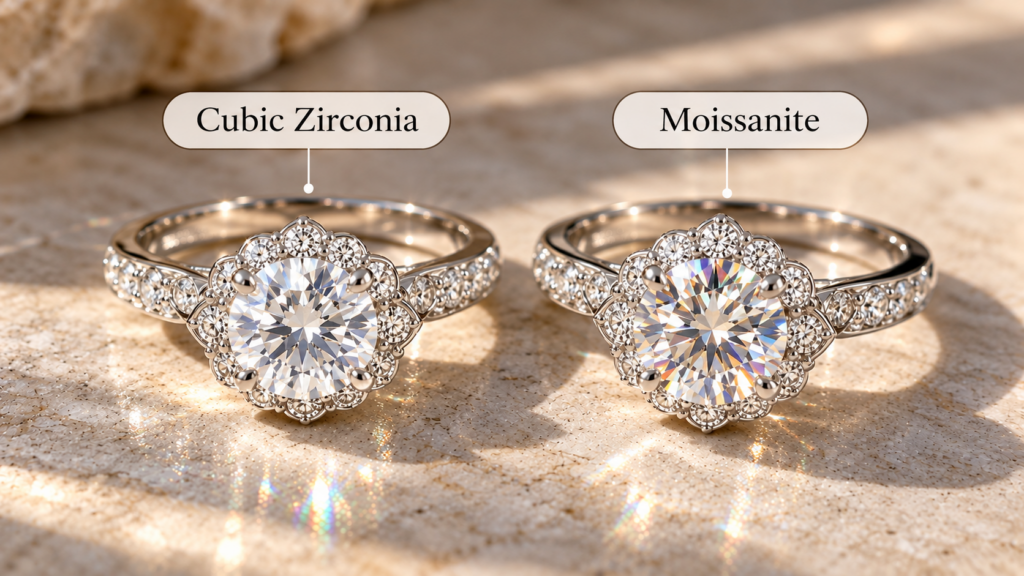
For an engagement ring worn most days, moissanite is usually the stronger choice. Its harder surface is better at resisting scratches and keeping facet edges crisp through regular wear. Cubic zirconia can still be a thoughtful fit for travel, fashion, temporary use, or the lower upfront cost. Your sparkle preference, budget, care habits, and timeline should decide the rest.
Both stones can look bright and colorless, but they behave differently once they become part of daily life. This cubic zirconia vs moissanite guide compares appearance, durability, care, cost, and long-term wear so you can choose with clarity, not pressure.
| Factor | Moissanite | Cubic Zirconia |
| Composition | Lab-created silicon carbide | Lab-created zirconium dioxide |
| Mohs hardness | About 9.25 | About 8.5 |
| Optical character | Vivid rainbow fire, with doubled back facets possible | Broad, calmer flashes |
| Relative weight | Lighter at the same dimensions | Heavier at the same dimensions |
| Care | Warm water, mild soap, a soft brush, and setting checks | Same basic care. Surface wear may be more visible |
| Upfront price | Usually higher than cubic zirconia | Usually the lower-cost option |
| Best fit | Frequent wear and a lively sparkle preference | Travel, temporary, occasional, or fashion jewelry |
The tradeoff is straightforward. Moissanite favors frequent wear, stronger scratch resistance, and vivid rainbow fire. Cubic zirconia keeps the initial cost down and works well when occasional use or easy replacement matters more than long-term surface condition. If you want to compare the same shapes and settings across materials, browse engagement rings after reviewing the tradeoffs below.
Moissanite and cubic zirconia are distinct gem materials often used as diamond simulants. They aren’t interchangeable. Each can resemble a diamond, but the two differ in chemistry, crystal structure, optical behavior, density, and how they wear.
Origin language trips people up. A stone can be lab-created without being a lab-grown diamond. The FTC’s jewelry guidance calls for clear labels on simulated stones so shoppers understand what they’re buying. Moissanite is silicon carbide, cubic zirconia is zirconium dioxide, and neither is a diamond. If that distinction affects your shortlist, compare moissanite vs lab-grown diamond before choosing a center stone.
Jewelry-grade moissanite is lab-created silicon carbide. Natural moissanite is exceptionally rare, which is why the moissanite in modern engagement rings is made in a controlled setting.
Moissanite is known for intense fire, the colorful flashes you see as light splits inside a faceted stone and moves with every turn of your hand. It is doubly refractive, which can make back facets appear doubled or slightly soft from certain viewing angles. Some people love that lively optical character. Others prefer a quieter look.
At about 9.25 on the Mohs scale, moissanite has strong resistance to scratching. That makes it suitable for many rings intended for frequent wear, provided the stone is securely set and cared for.
Compare moissanite by color, clarity, cut, and how securely the stone is set, not by the material name alone. Color and clarity tell you how clean and colorless the stone appears. Cut and setting shape the sparkle you see and how the ring handles daily wear. Do Amore offers colorless, VVS moissanite, giving first-time shoppers a defined starting point instead of an unspecified grade. From there, judge the stone in the size, shape, and setting you plan to wear.
Cubic zirconia, often shortened to CZ, is lab-created zirconium dioxide. It can be nearly colorless, highly clear, and bright when new, which helps explain its popularity as an accessible diamond simulant.
Its big advantage is price. Cubic zirconia can make sense for a travel ring, a temporary engagement ring, fashion jewelry, or a low-commitment way to test a shape before choosing a long-term center stone.
Cubic zirconia is less scratch-resistant than moissanite, with a Mohs hardness of about 8.5. It is denser, so a CZ will usually feel heavier than a moissanite cut to similar dimensions. Understanding cubic zirconia fairly can still help you choose the right material for your plans.
Start with the flashes. Moissanite tends to throw vivid rainbow fire, especially in strong or directional light, and cubic zirconia usually shows broader, calmer flashes. You’ll see less of the doubled-facet effect in cubic zirconia.
GIA’s guide to gem simulants explains the differences in fire, brilliance, and double refraction. Photos can’t settle this one. Stone size, cut quality, lighting, and the setting can all change what your eye notices first.
Which looks more like a diamond? There is no universal winner. A well-cut cubic zirconia may look familiar in softer light, but moissanite can appear sharper over time because of its stronger scratch resistance. In larger stones or bright lighting, moissanite’s colorful fire may stand out more clearly as its own look. If diamond remains on your shortlist, a broader diamond vs moissanite comparison can help separate optical differences from wear preferences.
One number can’t tell you how a ring will age. Hardness covers scratches and abrasions. Toughness is about breaking or chipping. Stability describes how a gem responds to heat, light, chemicals, and environmental change.
GIA’s explanation of gemstone durability makes the distinction clear. A hard stone can still chip after a sharp impact. Even a durable center stone depends on secure prongs, a well-made setting, and sensible daily habits.
For routine cleaning, use warm water, mild soap, and a soft brush. Rinse well and dry with a lint-free cloth. Store rings separately so harder stones and metal edges do not scratch other pieces. Remove your ring for activities that expose it to hard knocks, harsh chemicals, or heavy grime.
A jeweler should check the setting from time to time, especially if you hear movement or notice a bent prong. Cleaning can restore brightness when surface residue is the cause. It cannot repair worn facet edges or a damaged setting.
Hardness helps, but it isn’t a lifetime guarantee. The Mohs scale ranks scratch resistance. That’s all.
So the gap between 8.5 and 9.25 is not a simple percentage. In everyday terms, moissanite is more likely to keep crisp facet surfaces through frequent wear. Cubic zirconia can still perform well for its intended use, especially when the ring is worn occasionally and stored with care.
Daily life creates more contact than most people expect. Rings meet countertops, dust, grit, other jewelry, and the occasional door frame. If this will be your everyday engagement ring for years, scratch resistance deserves more weight in your decision.
Cloudy doesn’t always mean damaged. Surface residue can dull a stone’s sparkle, so a gentle cleaning may bring the brightness right back.
If haze remains, visible scratches or worn facet junctions may be reducing the stone’s brilliance. GIA notes that colorless CZ may yellow over time. Those changes are different from removable residue, so no honest guide can promise that every stone will return to its original appearance after cleaning.
Start with mild soap and warm water. If the stone still looks dull, ask a jeweler to inspect the facets and setting. Avoid fixed claims that every CZ clouds within a certain number of years, because wear depends on the stone, setting, care, and how often the ring is worn.
Cubic zirconia usually costs less upfront. Moissanite costs more, but its harder surface is better suited to frequent wear. Exact prices swing too widely by stone size, cut, seller, and setting for a fixed range to be useful here.
Value is personal. Think about cost per wear and peace of mind. How often will you wear the ring, and would visible surface wear bother you? Would replacing the center stone later feel reasonable, or does vivid fire make you smile enough to justify paying more?
Treat both stones as personal purchases, not financial assets expected to grow in value over time. Look for the option that fits your real use, preferred appearance, and replacement tolerance without stretching your budget.
An engagement ring’s meaning comes from the choice behind it, not from paying the highest price for the center stone. Moissanite can reflect a preference for vivid fire and frequent wear, and cubic zirconia can suit travel, temporary use, or style testing. Do Amore adds another layer of meaning by connecting every purchase to clean water for one person. Couples can follow the specific project their purchase supported, so the story continues beyond the ring itself.
For frequent long-term wear, moissanite is usually the better fit. Its higher scratch resistance gives it an advantage when a ring will meet the small abrasions of daily life. Cubic zirconia can still be the right answer for temporary, travel, occasional, or fashion use.
A quick gut check helps. Put four priorities in order for yourself, starting with wear frequency, sparkle style, replacement tolerance, and budget. If frequent wear and crisp facets land at the top, moissanite is likely the stronger match for the ring you picture wearing every day. When initial cost matters most and you accept more visible wear, CZ may suit the moment.
Do Amore works with moissanite as one of its fine-gemstone options. If you are leaning toward moissanite, the guide on how to choose a moissanite ring can help you compare color, cut, size, and setting.
Choose moissanite if the ring will be worn most days and scratch resistance matters more than the lowest initial price. Love bold rainbow fire? That lively look is part of moissanite’s personality, so make sure it feels like you.
It is a strong match when you plan to invest in a lasting setting, follow a simple care routine, and have a jeweler check the prongs when needed. Moissanite is its own gemstone, so choose it for what it is.
Cubic zirconia makes sense for a temporary ring, travel, occasional wear, or testing a shape at a lower upfront cost. It can work well in fashion jewelry when long-term surface wear isn’t a major concern.
The key is expectation. If you are comfortable with the possibility of more visible scratches, worn facet edges, or replacement later, cubic zirconia may fit the job well.
Your best choice should fit the life the ring will actually live. Moissanite is usually more practical for a frequently worn engagement ring. Cubic zirconia remains a valid option when affordability, travel, temporary use, or style testing comes first.
If moissanite matches your wear habits and taste, Do Amore gives you a defined quality starting point with colorless, VVS stones.
Every Do Amore purchase helps fund clean water for one person, and couples can follow the specific project their ring supported through the brand’s clean-water impact. Ready to keep looking? Explore moissanite engagement rings or speak with Do Amore’s online team about a durable center stone that suits your style and budget