Your Bag Is Empty
Explore timeless jewelry that carries love and inspires lasting change
Every purchase gives one person access to clean, life-changing water.
Explore timeless jewelry that carries love and inspires lasting change

Shape is the outline you see when you look at a diamond from above. Round, oval, pear, and marquise describe silhouettes.
Cut style describes the arrangement of the facets that handle light. People sometimes search for diamond cut shapes, but these two ideas work together rather than meaning the same thing.
Brilliant styles use many triangular or kite-shaped facets to create lively brightness, fire, and scintillation. Step cuts use long, open facets in rows, which produce broad flashes and a hall-of-mirrors look. A princess cut uses a brilliant-style pattern, so princess cut vs brilliant cut is not an either-or choice.
If you want a quick diamond shape comparison, use this chart as a starting point. Face-up size and sparkle still depend on the individual stone’s proportions and cut quality.
| Shape | Sparkle style | Face-up size tendency | Setting or durability note | Best fit |
| Round | Bright, balanced brilliant | Moderate for its weight | Works in most settings | Classic style and strong sparkle |
| Princess | Brilliant, crisp flashes | Can face up smaller | Protect all four corners | Modern square look |
| Cushion | Brilliant or modified brilliant | Often deeper | Rounded corners are less exposed | Soft, vintage-inspired style |
| Oval | Brilliant | Often looks larger | Check bowtie and symmetry | Elongated, graceful look |
| Emerald | Broad step-cut flashes | Often looks large | Cropped corners are durable | Clean lines and subtle light |
| Radiant | Brilliant, sometimes crushed ice | Square or elongated | Cropped corners add protection | Geometric shape with sparkle |
| Pear | Brilliant | Often looks larger | Protect the point | Romantic, asymmetrical style |
| Heart | Brilliant | Shape varies by proportion | Protect the point, check symmetry | Bold, sentimental style |
| Marquise | Brilliant | Often looks especially large | Protect both points | Dramatic length and finger coverage |
| Asscher | Broad step-cut flashes | Deep cut can face up smaller | Cropped corners suit secure prongs | Art Deco and square geometry |
The best diamond shape is the one that suits the wearer, the setting, and the budget. Use these five checks to narrow the field without treating any shape as a universal winner.
Try your top two shapes in the same size range and look at them face-up. The best choice is the one that feels right on the hand and works securely in the setting.
Pointed diamond shapes need settings that shield each exposed tip or corner from hard knocks. Pear and Heart need protection at the point, Marquise at both ends, and Princess at all four corners. V-prongs, bezels, or carefully placed prongs can guard those edges without hiding the outline.
For a fully custom Do Amore ring, buyers see 3D renderings after placing the order and before production begins. Use that review to check that every vulnerable edge is covered and the shape still reads clearly from above.

Round diamonds have a circular outline and a classic look. They are known for strong brightness and lively sparkle. Gem cutters and mathematicians have spent decades refining the Round brilliant’s proportions and facet alignment.
The Round brilliant is the only diamond shape that receives an official GIA cut grade, from Excellent to Poor. That grade reflects brightness, fire, scintillation, proportions, symmetry, and polish.

Princess cut diamonds have a square outline, straight edges, and four sharp corners. Their triangular and kite-shaped facets produce brilliant-style sparkle. The modern Princess cut was created in 1981 by Betzalel Ambar and Israel Itskowitz, correcting older wording that described it as designed in 1980.
Its crisp geometry makes it one of the newest familiar diamond shapes. Choose a setting that protects every corner.

Charu Engagement Ring with 6.2mm Princess Diamond
Princess suits couples who want a crisp square outline and brilliant-style sparkle. princess cut engagement rings feel modern and work well for shoppers who prefer clean angles over soft curves.
Princess cuts have a crisp, modern look. Shoppers who prefer softer curves or an antique-inspired profile may feel more at home with Cushion, Oval, or Asscher shapes. Compare a few square and softened outlines side by side before deciding.
Look for balanced light and dark flashes as the Princess moves. Inspect color closely because some Princess cuts show tint more easily than Rounds. Carat measures weight, not face-up size, and a deep pavilion can hide weight below the girdle.
Compare width and height, then choose protective prongs for all four corners. For more guidance, read our Princess cut diamond buying guide.
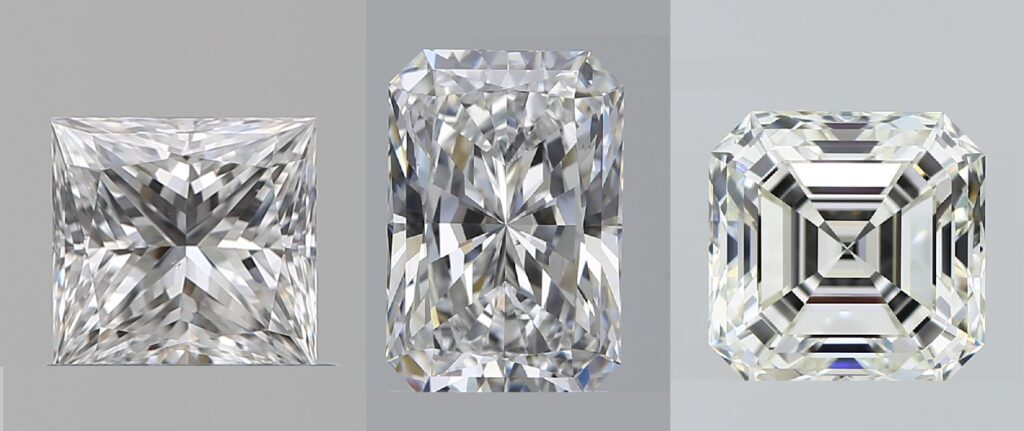
Compare Princess with Radiant, Cushion, and Asscher. A radiant cut vs princess cut comparison focuses on corners, outline, and sparkle pattern.
For princess cut vs cushion cut, compare crisp corners with a softer edge. Asscher keeps the square look but replaces lively scintillation with broad step-cut flashes.
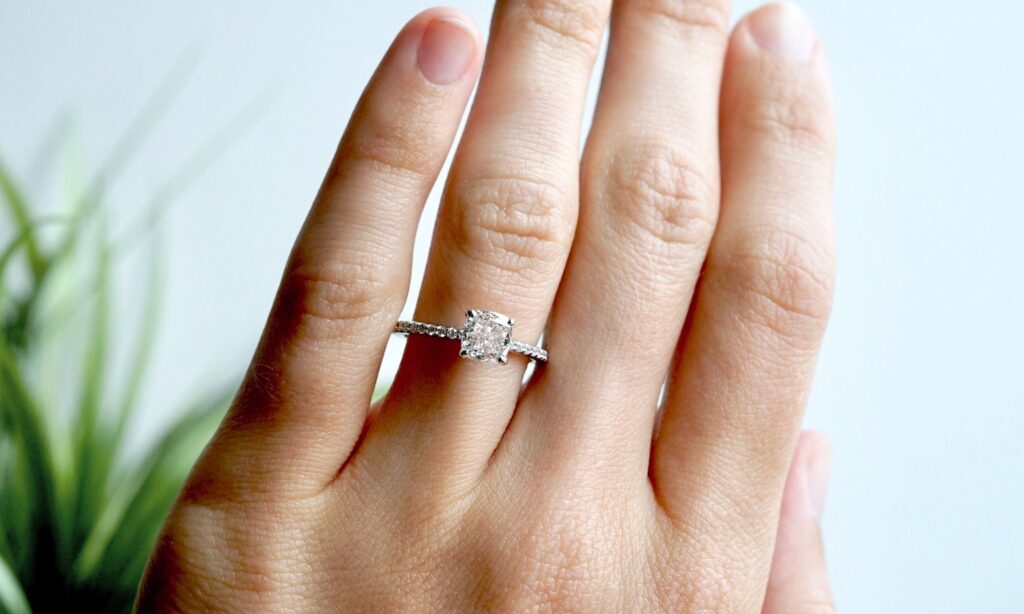
Cushion cut diamonds are square or rectangular stones with soft, rounded corners. Cushion cut engagement rings can look compact or elongated, but their softened outline separates them from Princess cuts.
Cushions use brilliant or modified-brilliant facet patterns, from broad flashes to crushed-ice looks. Compare the actual light pattern instead of treating one style as automatically better.
Diana Engagement Ring with 6.1mm Cushion Diamond
Cushion suits couples who like soft corners, vintage influence, and brilliant-style sparkle. Square and elongated proportions make the shape flexible, from classic solitaires to more playful designs.
Some Cushion diamonds are cut deeply, which can reduce face-up size. If visible size is your top priority, compare measurements across several Cushions and include Oval or Radiant in your shortlist.
Choose between broad flashes and a crushed-ice look, then compare each Cushion’s measurements and depth. Some Cushions carry more weight below the girdle, which can reduce their face-up size. For more guidance, read our Cushion cut diamond buying guide.
Compare Cushion with Round, Princess, Radiant, and Oval. A cushion vs round diamond comparison balances the Cushion’s soft outline and varied facet patterns against the Round’s consistent brilliant design.
For princess cut vs cushion cut, focus on sharp corners versus rounded ones. Radiant and Oval provide elongated options with different outlines.
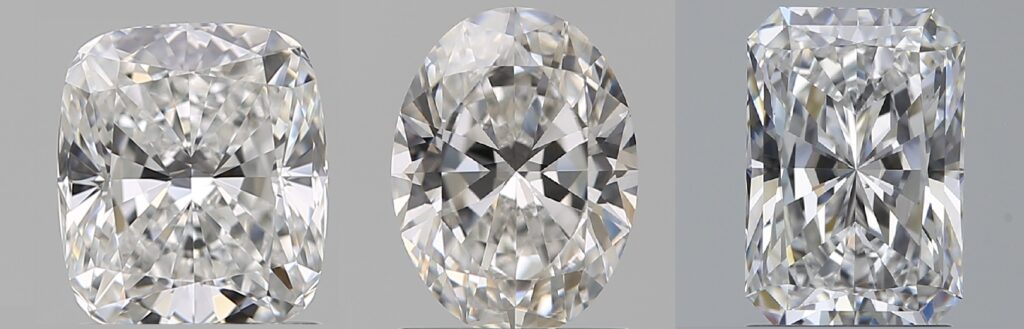
Elongated Cushion vs Oval vs Radiant Diamonds
Oval diamonds use a brilliant-style facet pattern in an elongated outline. Browse Oval cut engagement rings to see how the shape adds length and lively sparkle. Compare each diamond’s measurements and depth to understand its face-up size.
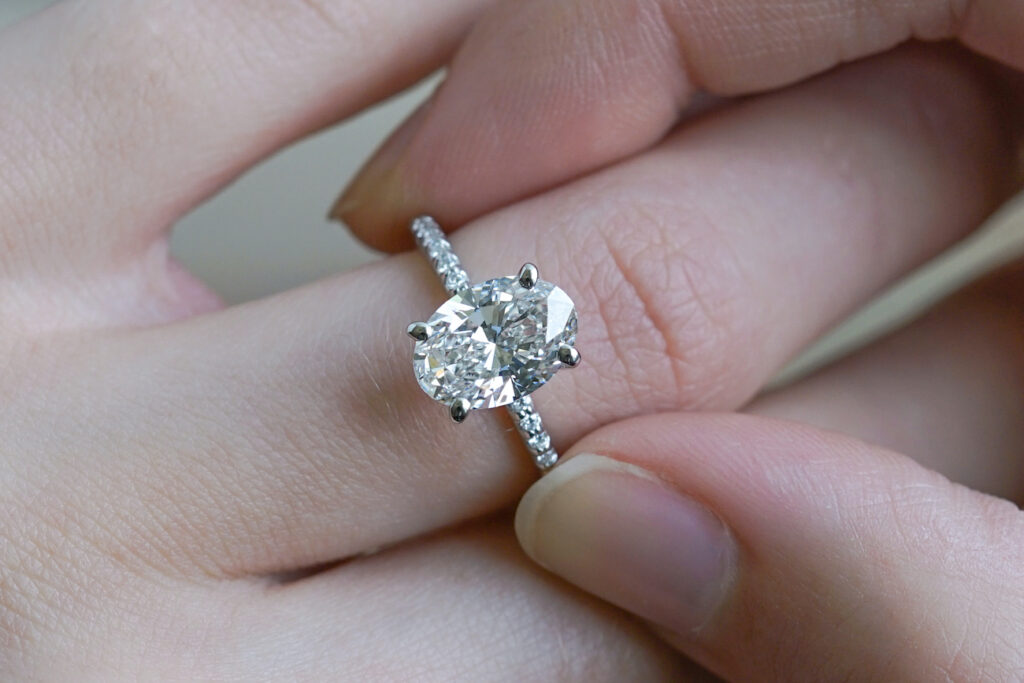
Diana Engagement ring with 10x7mm Oval Diamond
Oval suits couples who want a familiar silhouette with more length than Round. It feels classic without looking fully traditional. Do Amore founder Krish chose an Oval diamond for his proposal.
Oval has soft curves and a familiar silhouette. If you want sharp angles or a more architectural look, compare Princess, Radiant, and Emerald shapes.
Oval cuts often show a bowtie shadow across the center. Look for a subtle bowtie that does not distract from the rest of the diamond.
Check for even color at both ends and a balanced, pleasing outline. Click here to learn about length-to-width ratio in our Oval diamond buying guide.
Compare Oval with Marquise and elongated Cushion. Marquise offers a long outline and often generous face-up coverage. Elongated Cushions soften the profile with rounded corners and varied brilliant facet patterns.
This trio appears in our guide to best engagement rings for small hands, where longer outlines can keep a slim band in proportion. A different balance may suit engagement rings for long fingers, which can benefit from more lateral width or a setting that breaks up the vertical line. Stone shape and setting also influence how carat size looks on a finger, so the same weight can create a very different visual impression.
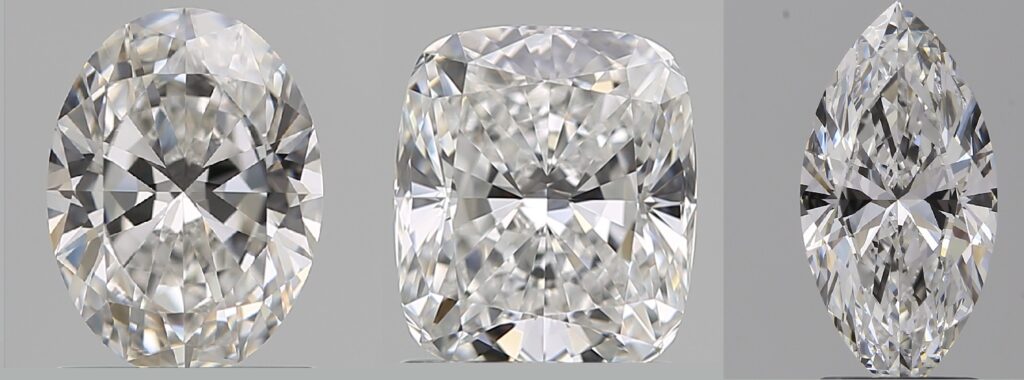
Oval vs Elongated Cushion vs Marquise Diamonds
Emerald cut diamonds have a rectangular outline, cropped corners, and long step facets that create a hall-of-mirrors effect. They produce broad flashes instead of the lively scintillation of brilliant-style cuts. Their open facets can make inclusions and body color easier to see, so compare individual diamonds face-up.
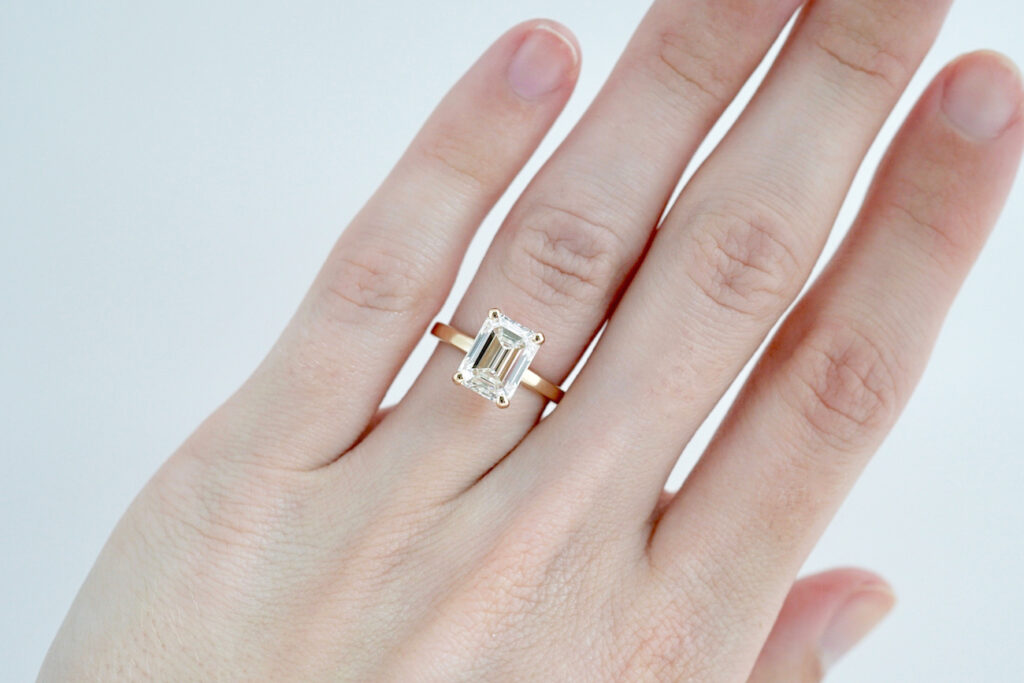
Asha Engagement Ring with 9.5x7mm Emerald Diamond
Emerald suits couples who want broad, quiet flashes and an elegant outline. Its open step facets reward close inspection of the actual diamond.
Explore our emerald cut engagement rings. Focus on the stone’s face-up appearance instead of assuming a fixed color or clarity minimum.
Emeralds give broad flashes rather than the lively scintillation of a brilliant-style cut. If maximum sparkle is your goal, compare Radiant or elongated Cushion shapes. If you like the Emerald outline, review several stones face-up because color and inclusions can be more visible through the open facets.
Emerald cuts can show a dark center from their mirror-like faceting. Rock the diamond back and forth and look for balanced vertical light and dark play without a distracting boxy area. Open step facets may reveal inclusions and body color more easily, so inspect the diamond face-up.
Review its grading report, measurements, and size instead of relying on one clarity grade. Click here for more guidance on choosing an Emerald cut.
A radiant cut vs emerald cut diamond comparison starts with the light pattern. Radiants use brilliant-style facets for lively sparkle.
Emeralds use open step facets for broad flashes. If you are weighing emerald vs radiant cut, look at both stones face-up in similar sizes. Elongated Cushions offer softer corners and varied brilliant patterns, and Asschers bring the Emerald’s step-cut look into a square outline.

Emerald vs Radiant vs Elongated Cushion vs Asscher
A radiant-shaped diamond can be square or rectangular, with cropped corners and brilliant-style facets. Created in 1977, the Radiant balances a geometric outline with lively sparkle.
Its trimmed corners are less exposed than the sharp points of Princess, Pear, Heart, or Marquise shapes. Faceting varies, including broader patterns and crushed-ice looks.
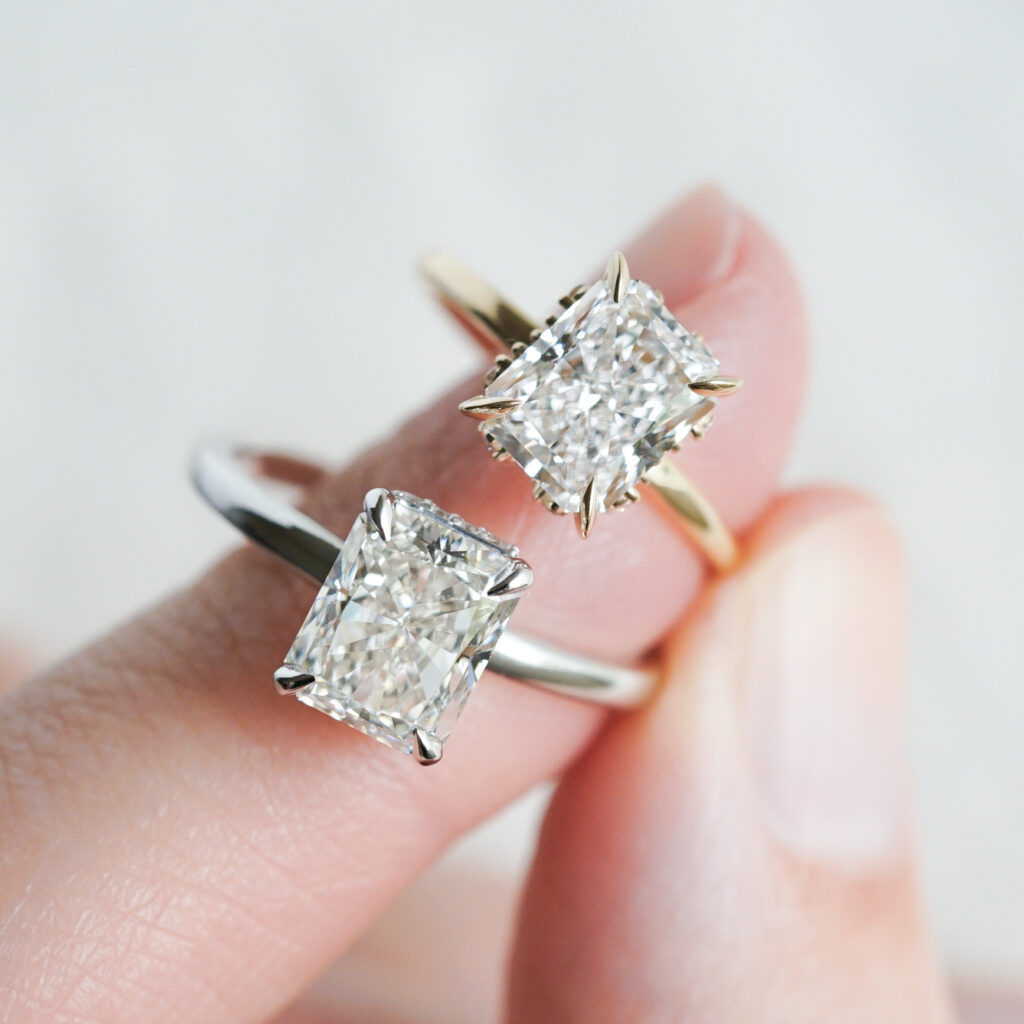
7.5x6mm Custom Radiant and 8x6mm Radiant in Jolie Ring
Radiant suits couples who want a geometric outline with lively, brilliant-style sparkle. It can be square or elongated, and its cropped corners work well in protective settings.
Browse our radiant cut engagement rings. Compare the actual diamond’s color, clarity, and face-up pattern instead of relying on a fixed minimum.
Radiant has straight sides and cropped corners. If you prefer softer curves, compare Oval or Cushion. Facet patterns vary, especially in crushed-ice styles, so judge individual diamonds face-up.
Radiant facet patterns range from broad, defined flashes to a crushed-ice look. Decide which light pattern you prefer, then inspect the diamond for even color and balanced brightness across the face. Review these radiant cut flaws to watch for, then read our Radiant cut buying guide.
A radiant cut vs princess cut comparison puts two brilliant-style shapes side by side. Princess has sharp corners, and Radiant has cropped corners with square or rectangular options.
For emerald vs radiant cut, the outline may look similar but the light pattern differs. Emerald shows broad step-cut flashes, and Radiant produces livelier sparkle. Elongated Cushion offers another crushed-ice option.
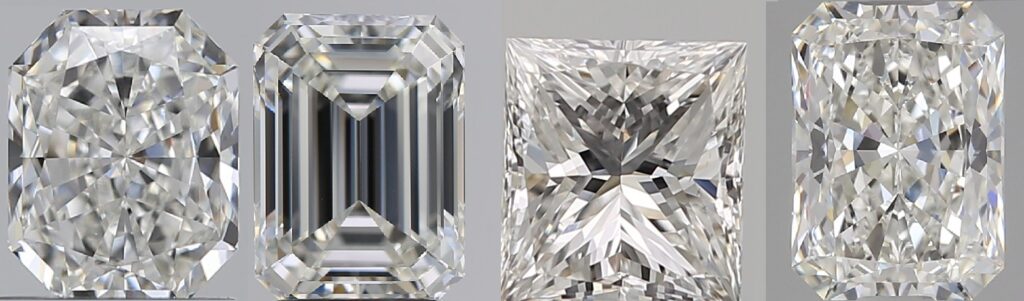
Traditional Radiant vs Emerald vs Elongated Princess vs Crushed-Ice Radiant
Pear-shaped diamonds combine a rounded end with a single pointed tip. They range from slender to plump and can be worn with the point facing up or down.
This centuries-old brilliant shape produces lively sparkle and an elongated look. Explore our pear shape engagement rings.
White gold pairs especially well with pear shapes for a sleek, elongated look. Browse our pear shape white gold engagement rings.

8x5mm Pear Diamond in Elle ring
Pear suits anyone who wants an artistic, asymmetrical outline. You can wear the point up or down, or set the diamond sideways for a less conventional look.
Pear is less traditional than a symmetrical Round, Cushion, or Oval. Choose another outline if you prefer classic balance or want the ring to read the same from either direction.
Pear diamonds range from slender to plump. Focus on a graceful outline with smooth curves and a defined point. Check that both sides are balanced, the bowtie is subtle, and the tip sits under a protective prong or bezel.
Color can gather near the point, so look for even color. For more guidance, read our Pear-shaped buying guide.
Compare Pear with Heart and Oval. Heart shares the Pear’s asymmetry and pointed tip but adds a more literal romantic symbol. Oval keeps the elongated look with a symmetrical outline and lively brilliant-style sparkle.
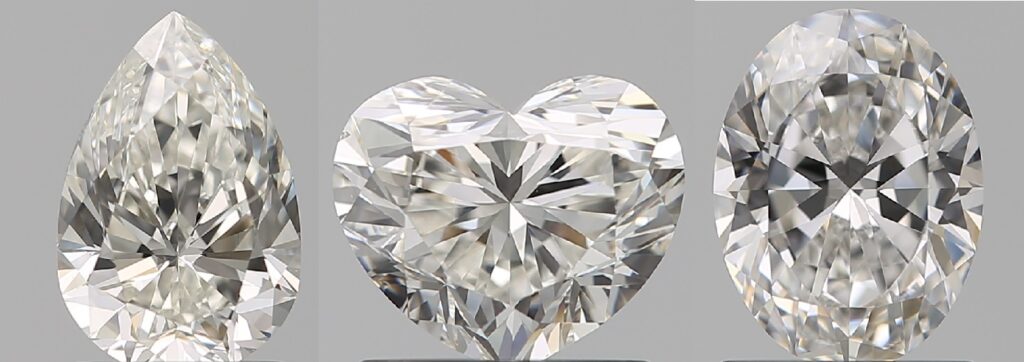
Pear vs Heart vs Oval Diamonds
Heart-shaped diamonds have two lobes, a central cleft, and a pointed tip. Their brilliant-style facets create lively sparkle, but the outline depends heavily on symmetry and proportion. Compare slender and plump Hearts to see which shape reads most clearly face-up.
This centuries-old style makes a bold, romantic statement. Explore our heart shape engagement rings.
Heart Shaped Diamond in Custom Ring
Heart-shaped diamonds suit romantics who want the symbol to be unmistakable. The outline feels playful and sentimental, so it works best when the wearer already loves the shape.
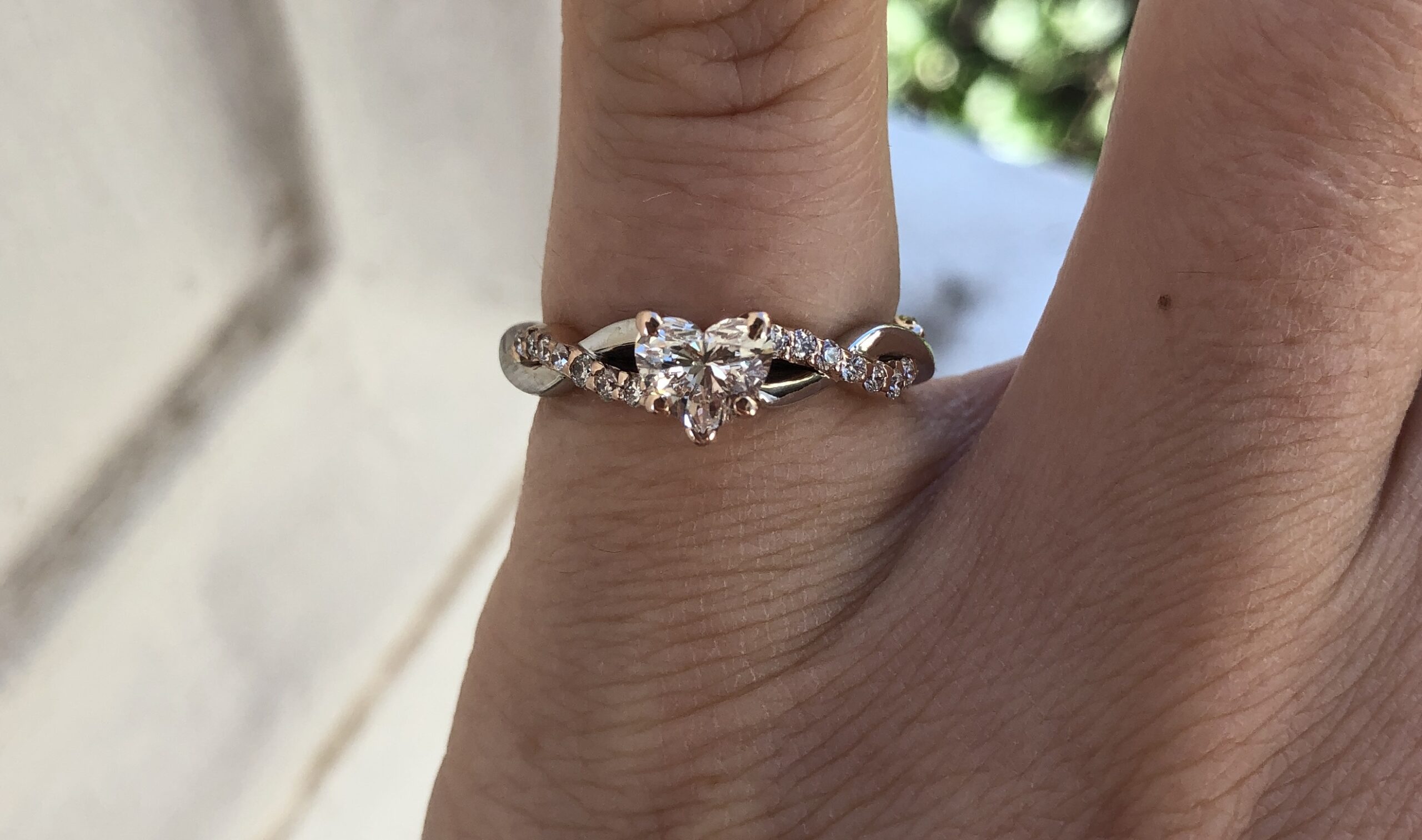
Heart Shaped Diamond in Custom Ring
Heart is a bold, highly personal choice. If you prefer a quieter or more symmetrical outline, compare Round, Cushion, or Radiant shapes.
Shape and symmetry matter most in a Heart diamond. Look for balanced lobes, a clean cleft, and a centered point. The setting should protect that point without hiding the outline.
Compare slender and plump proportions face-up, then check for even color near the tip. For more guidance, read our Heart-shaped buying guide.
Compare Heart with Pear and Marquise if you like distinctive, romantic outlines. A plump Pear offers a similar asymmetry with one pointed end. A balanced Marquise gives you two points, generous face-up coverage, and a playful silhouette.
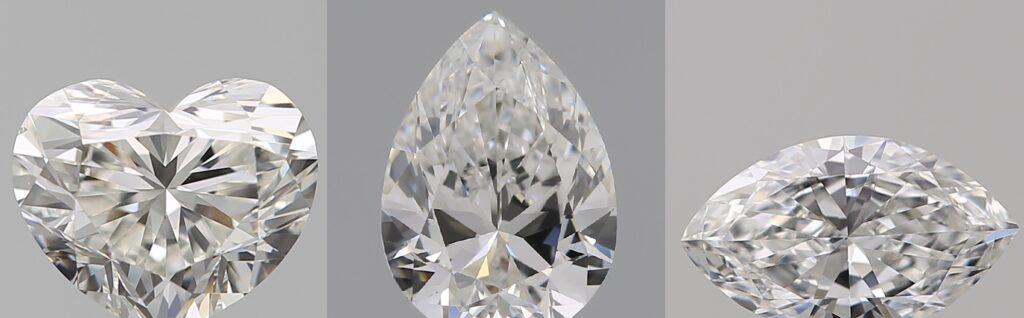
Heart vs Plump Pear vs Plump Marquise Diamonds
Marquise cut diamonds have an elongated, almond-shaped outline with a point at each end. This centuries-old brilliant shape often faces up especially large for its carat weight.
The shape’s popularity in the 1970s and 1980s still influences how some shoppers see it today. Marquise diamonds can be slender, balanced, or plump, and they can sit vertically or horizontally in a ring.
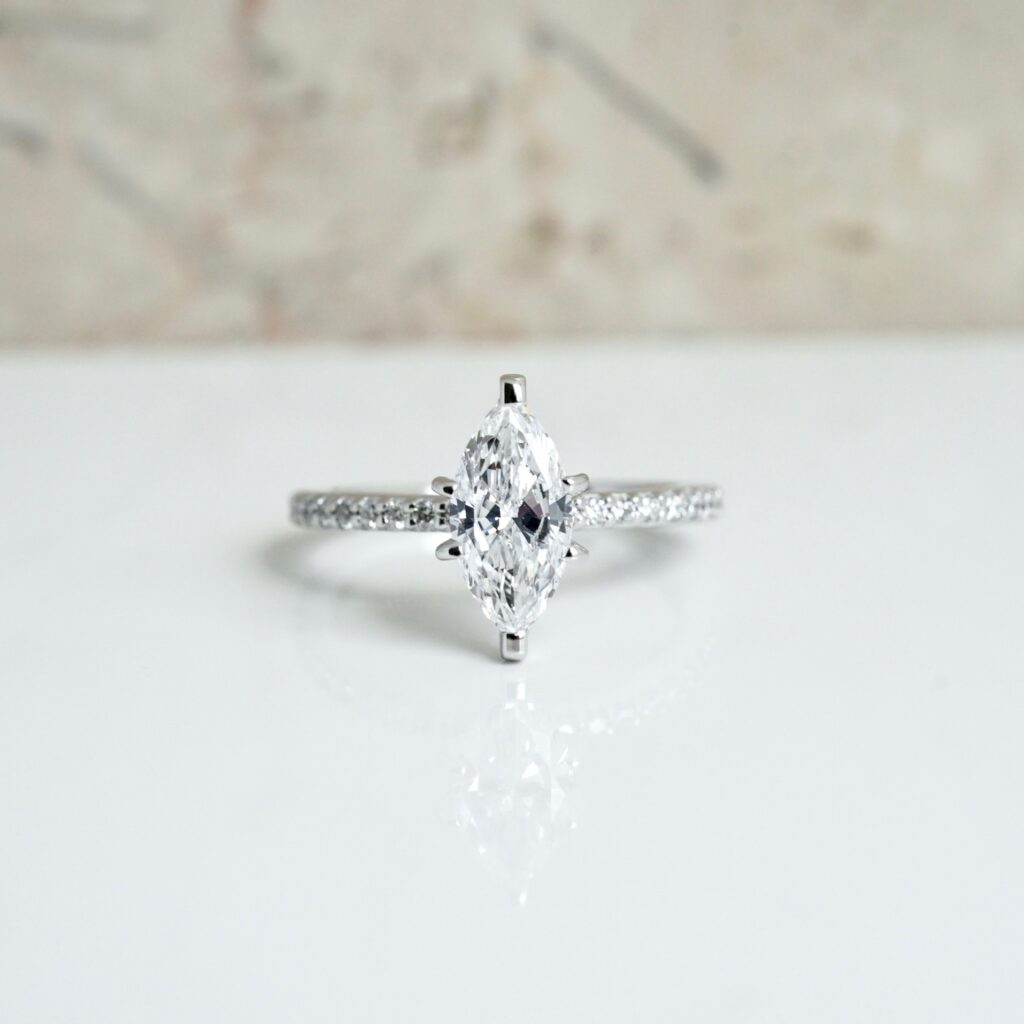
10x5mm Marquise Diamond in Diana Ring
Marquise suits couples who want an unexpected, elongated shape. Its popularity in the 1970s and 1980s gives it a vintage association, but clean settings can make it feel modern.
The outline can offer generous face-up coverage for its carat weight. If you want a statement ring, explore our marquise cut engagement rings.
Marquise has a strong silhouette that may feel too dramatic if you prefer rounded edges or a quieter profile. Compare Oval, Pear, or Cushion shapes. The two pointed ends need a protective setting, which can influence the ring design.
Choose a Marquise with a balanced, pleasing outline. Look for soft curves rather than flat or boxy sides, plus two sharp, aligned points. Both halves should be symmetrical, the bowtie should be subtle, and both tips should sit under V-prongs or another protective setting.
Color can gather near the points, so check for even color. For more guidance, read our Marquise cut buying guide.
Compare Marquise with Oval and Pear if you like elongated outlines. Pear combines a rounded end with one point for a softer asymmetry. Oval keeps the length but replaces the exposed points with curves and offers lively brilliant-style sparkle.
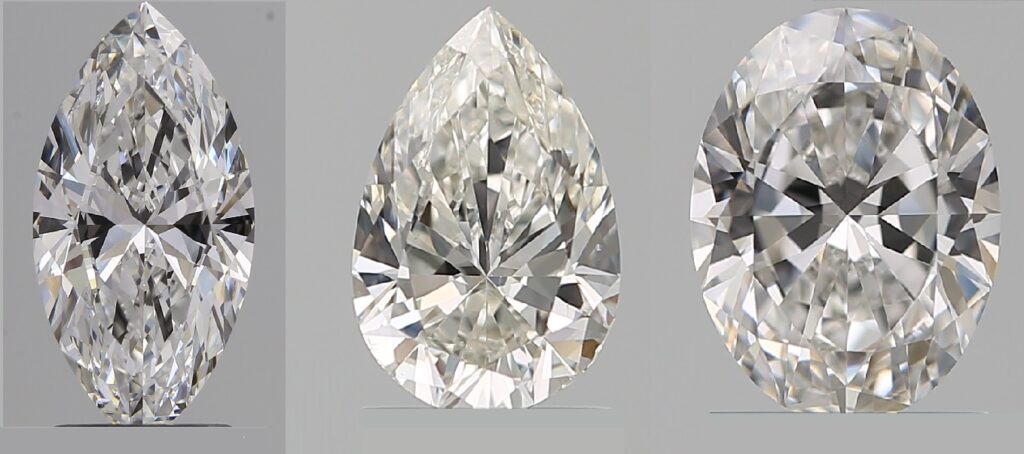
Marquise vs Pear vs Oval Diamonds
Asscher cut diamonds are square stones with clipped corners and rectangular step facets that create a hall-of-mirrors effect. They flash between light and dark as the stone moves instead of producing the lively scintillation of a brilliant cut. Their open facets can make inclusions and body color easier to see, so judge each diamond face-up.

Asscher cut diamond ring
Asscher suits couples who like simple elegance, broad flashes, and Art Deco geometry. Its open facets reward a close, face-up inspection of the diamond and grading report. If the shape feels right, explore our Asscher cut engagement rings.
Asschers produce broad, step-cut flashes rather than the lively scintillation of a brilliant-style cut. If you want a square outline with more active sparkle, compare Radiant and Princess shapes. Review several Asschers face-up because inclusions, body color, and apparent size vary from stone to stone.
Asscher cuts can show a dark “black box” in the center from their mirror-like faceting. Look for balanced light and dark flashes without a distracting dark center. Open step facets may reveal inclusions and body color more easily, so inspect the diamond face-up.
Review its grading report, measurements, and size instead of relying on one clarity grade. Click here for more tips on choosing an Asscher cut.
Compare Asscher with Princess, Cushion, and Emerald. Princess keeps a square outline with lively brilliant-style sparkle.
Cushion softens the corners and may offer a lower price at similar quality. Emerald shares the Asscher’s step-cut flashes in a rectangular outline.

Asscher vs Princess vs Cushion Diamonds
Use these short answers as a starting point, then compare individual diamonds face-up.
The 10 shapes compared here are Round, Princess, Cushion, Oval, Emerald, Radiant, Pear, Heart, Marquise, and Asscher. Round is the standard outline. The other nine are commonly grouped as fancy shapes.
Well-cut Round brilliant diamonds are known for strong brightness, fire, and scintillation. Round is the only shape that receives an official GIA cut grade, but every diamond still needs a close look at its proportions and face-up performance.
Marquise, Oval, and Pear diamonds often look larger face-up because their elongated outlines spread weight across more of the finger. Proportions and depth vary, so compare measurements rather than relying on carat weight alone.
Emerald and Radiant are the two most familiar rectangular diamond shapes. Elongated Cushion and some Princess diamonds can be rectangular too, with different corners and facet patterns.
There is no universal winner. The best diamond shape fits the wearer’s style, gives the light pattern they enjoy, and works safely in the chosen setting and budget.
Choosing a diamond shape should feel exciting, not overwhelming. Compare the shapes you like, then look at each stone face-up in a secure setting.
Do Amore helps you compare responsibly sourced, conflict-free natural and lab-grown diamonds by face-up size, sparkle, and setting fit, so you can choose without pressure. Every ring gives one person access to clean water, and you can see the water project your purchase supported.
If you want a second opinion, Email me or send us a note here, with pictures, ideas, or questions. We’lll help you compare the options without pressure.