Your Bag Is Empty
Explore timeless jewelry that carries love and inspires lasting change
Every purchase gives one person access to clean, life-changing water.
Explore timeless jewelry that carries love and inspires lasting change
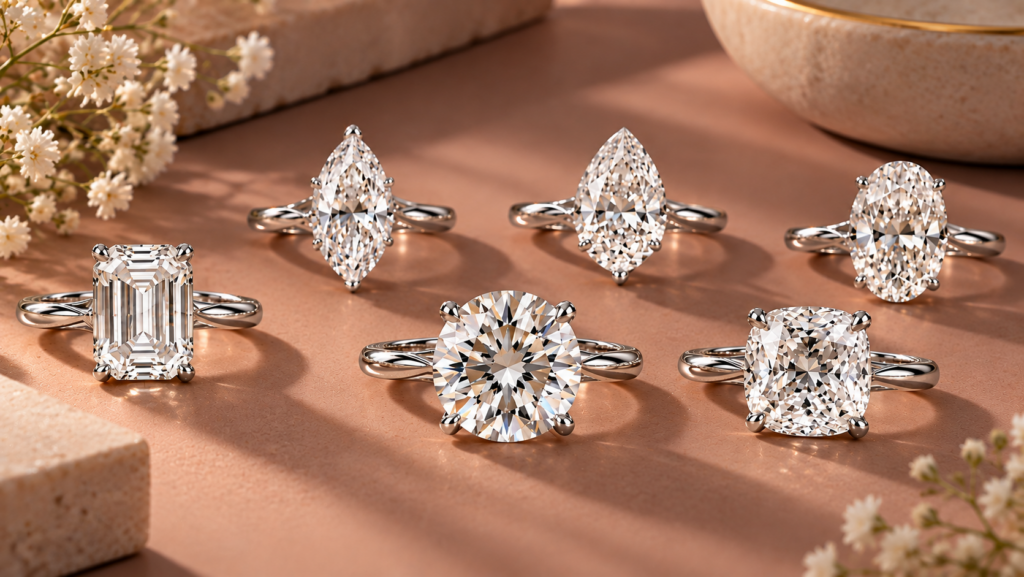
If you’re wondering which diamond shape sparkles the most, a well-cut round brilliant has the greatest potential. Its facets balance bright white light, colored fire, and lively scintillation, but shape only sets the ceiling.
A poorly cut round can look dull beside a beautifully cut oval, cushion, radiant, or princess diamond.
Love a fancy shape? You can pair personality with strong light performance. Learn what kind of sparkle catches your eye, then judge the cut of the actual stone.
Round brilliant is the safest answer when sparkle comes first. A well-cut stone returns light efficiently from many angles, giving you brightness, colored fire, and quick flashes as it moves.
The standard round brilliant has 57 or 58 facets, depending on whether it has a culet at the bottom. That consistency gives graders a standardized framework for evaluating how the shape handles light. It is why round is the safest answer when your top priority is maximum all-around sparkle.
If you’re asking what diamond cut has the most sparkle, the word “round” alone still proves nothing because facet angles, proportions, polish, and symmetry have to work together. If light leaks through the bottom, that round can look flat beside a beautifully cut radiant or oval. Look at the stone, not its shape alone.
When you’re deciding between round and fancy, start with what you notice. Round usually wins on raw sparkle potential.
A fancy shape might win because you love its outline, the way its flashes move, or the extra finger coverage. Pick the one that keeps pulling your eye back.
Understanding what makes diamonds sparkle starts with three different effects. Once you can spot each one, comparing diamonds gets far less confusing.
Brilliance is the white light that comes back to your eye. Fire shows up as flashes of color. Scintillation is the pattern of light and dark, plus the quick flickers you see when the diamond, light, or viewer moves.
Diffused light reveals brightness and pattern, warmer point-source light shows fire, and motion makes scintillation easier to judge.
Facet patterns lean into those effects differently. Round brilliants mix them well.
Radiants and some cushions can look glittery or “crushed ice.” Step cuts throw wider, slower flashes that read more like mirrors than twinkle.
Your eye gets the final vote. You might want rapid sparkle across the whole stone, or you may fall for a calmer pattern with bold flashes. That preference matters more than a tidy ranking.
Shape is the outline you see from above. Round, oval, cushion, princess, radiant, emerald, and Asscher are all shape names. Cut quality tells you how well the proportions, facet pattern, polish, and symmetry manage light.
Two stones can share the same outline and look completely different. Shape gives a diamond its basic light pattern and personality. The cutter’s work decides how much of that potential reaches your eye.
For the diamond cut vs. shape distinction, think of shape as the design brief and cut quality as the execution. One oval can look bright from edge to edge, but another may stay dark through the center. The label hints at what you’ll see, but the diamond itself proves it.
GIA reserves the overall cut grade for standard round brilliants because their facets are standardized. Fancy shapes require closer attention to measurements, polish, symmetry, photos, and videos. For a broader look at outlines, use Do Amore’s diamond shapes guide, then return to the individual stone.
Round is usually the most brilliant diamond shape, but a well-cut fancy shape can still look lively. The table below shows the sparkle each style tends to produce, along with the flaws worth watching for. Individual stones will vary.
Treat the table as a starting point. Compare videos with similar carat weights, the same lighting, comparable camera movement, and views from more than one angle. Otherwise, a larger stone or brighter studio can make one diamond look better than it is.
| Shape | Sparkle intensity | Sparkle character | Common watch-outs | Best fit |
|---|---|---|---|---|
| Round brilliant | Highest overall potential | Balanced brightness, fire, and rapid scintillation | Poor proportions can still leak light | Maximum all-around sparkle |
| Oval | High when well cut | Lively brilliance with an elongated look | Distracting bow tie or dark center | Sparkle plus finger coverage |
| Princess | High when well cut | Sharp, energetic geometric flashes | Dark corners or weak edge brightness | Modern square outline |
| Radiant | High when well cut | Bright, glittering, often crushed-ice | Uneven pattern or dark areas | Angular shape with brilliant sparkle |
| Cushion | Medium to high | Chunky flashes or crushed-ice glitter | Wide variation between stones | Soft outline and personal sparkle style |
| Emerald or Asscher | Lower rapid twinkle | Broad, mirror-like flashes | Windowing, visible inclusions, dark steps | Calm, architectural light |
The round brilliant cut earns its reputation through symmetry and a repeatable facet pattern. You get strong light return and quick flashes across the face of the stone, with less guesswork than most fancy shapes.
When comparing round cut diamonds, put cut quality first. Strong polish and symmetry support a crisp pattern.
Balanced proportions help light return through the crown instead of escaping through the pavilion. Those visible gains often matter more than a color or clarity upgrade that only appears under magnification.
If you want the diamond cut with the most sparkle and less variation to sort through, round is the simplest place to start. Still, compare real stones side by side. Two rounds with the same headline grades can have surprisingly different personalities.
Round diamonds often cost more than other shapes because cutting a round brilliant removes more of the original rough, and buyers place a premium on its strong light performance.
Do Amore’s round-diamond collection lets you compare carat, cut, color, clarity, and price together, which makes the trade-off easier to see.
If sparkle leads your list, put cut first and compare the visible result before paying for a higher paper grade.
Oval diamonds can be bright and lively with an elongated outline. Ovals can show a bow tie, the dark band across the center.
A soft one adds contrast and movement. A heavy one takes over the stone, which is why video often matters more than a still image alone.
Princess and radiant diamonds bring a more geometric look. Princess cuts often show sharp, energetic flashes.
Radiants combine an angular outline with brilliant-style faceting. If that contrast appeals to you, Do Amore’s radiant cut guide can help you look more closely at proportions and light pattern.
Cushion cut diamonds offer broad variety. One might throw big, chunky flashes.
Another cushion cut diamond might sparkle with many tiny crushed-ice reflections. Watch them move in different light, and your favorite will usually be obvious.
Emerald and Asscher diamonds use long, parallel step facets. Instead of constant twinkle, they show broad flashes and crisp geometric contrast. The effect is quieter than a brilliant cut, and often quite striking in the right stone.
Those open facets make the details easier to see. Check the symmetry, the pattern of light and dark, and any obvious windowing where you can see through the center. Color and visible inclusions may stand out more than they would in a busy brilliant pattern.
Less twinkle creates a different kind of beauty. If you prefer clarity of pattern over constant glitter, the emerald cut guide is a useful next step, especially in larger stones.
The best diamond cut for sparkle is the one that sends light back to your eye, which is why cut quality decides where the light goes. Too-shallow, too-deep, or slightly misaligned facets can send light out through the bottom.
The diamond may look dark or watery, and it can face up smaller than its measurements suggest.
Extra facets alone fail to create more sparkle. Facet count shows how many reflective surfaces exist.
The angles determine whether those surfaces work together. Arrangement, proportions, polish, and symmetry matter far more than the number alone.
A balanced pattern spreads bright and dark areas across the face instead of leaving a persistent dead zone.
A thoughtful budget goes furthest here. A visible improvement in light performance can transform the stone every time you look at it.
A paper upgrade in color or clarity may cost more without producing a difference you notice. Do Amore’s cut and sparkle hub can help you explore shape-specific buying guidance without turning the process into a grading contest.
Start with the grading report, then review photos and video. The report organizes measurements and quality factors, but those visuals show how the stone handles light. That check matters even more with fancy shapes, where patterns vary widely.
Ask for enough visual detail to judge diamond light performance from edge to edge and see how the pattern changes in motion. When two stones look almost identical on paper, the livelier and more even one is often the easier choice.
Keep your shortlist to three or four diamonds for one comparison. Add more and the details blur, especially the brightness at the edges and the balance of each pattern. Notice which stone still keeps drawing your eye back without forcing the choice.
For a round brilliant, start with the overall cut grade. Then review polish, symmetry, measurements, and proportions. The report is a useful filter, but your eyes still get a say.
Fancy-shape reports give you dimensions, length-to-width ratio, polish, symmetry, and other details. The standard overall GIA cut grade applies only to round brilliants. The shapes and facet patterns vary too much for one rigid recipe to replace looking at the actual diamond.
Use the report to narrow the field, then watch the finalists move. If you’re still unsure, ask an expert to review the actual stones with you. A shape label or marketing term reveals little about how light behaves in that one diamond.
Compare the same kind of information because diamonds with similar carat weights can face up at different sizes. Stones with matching polish and symmetry grades can still show different light performance. Read the measurements alongside the video.
Look at the edges first. They should stay bright as the diamond moves. Some dark contrast gives the pattern life, but large zones that remain dead from several angles deserve another closer look from one angle to the next.
Ovals, pears, and marquises can show a bow tie. Watch whether it adds contrast or steals your attention.
In emerald and Asscher cuts, look for crisp steps without obvious windowing. With cushions and radiants, compare broad flashes against crushed-ice glitter.
If you’re testing what light makes diamonds sparkle, start with diffused white light to judge brightness and pattern.
Use spot or warmer light to reveal fire, and ordinary room light to see how the stone will look most days. GIA’s quality diamond guide recommends checking brightness and scintillation under diffused light, fire under incandescent light, and overall appearance across different environments.
Lab-grown and natural diamonds can show the same brilliance, fire, and scintillation because they share nearly the same optical properties.
Sparkle depends on how well the stone is cut, not where it formed.
Do Amore offers both origins, so review cut quality, even brightness, balanced contrast, and movement under more than one light.
Emerald and Asscher cuts show calmer, more deliberate light because their step facets create broad reflections. A well-cut step cut can still look bright, clean, and compelling. For some people, that quieter pattern is the whole appeal.
A halo or pavé band adds sparkle around the center stone. A solitaire leaves the diamond’s own light performance in full view. No setting can rescue a weak cut, so choose the center diamond first and let the setting support the look and daily wear you want.
So, which diamond shape sparkles the most? Round offers the highest potential, but let each stone earn the decision.
If you need help comparing finalists, ask Do Amore to review how each stone handles light rather than relying on the report alone. Start with the round and non-round options that fit your taste, then share your shortlist for a calm, side-by-side review.
At Do Amore, every ring supports clean water for one person. Compare responsibly sourced natural and lab-grown diamonds without pressure.