




Your bag is empty
Explore timeless jewelry that carries love and inspires lasting impact.
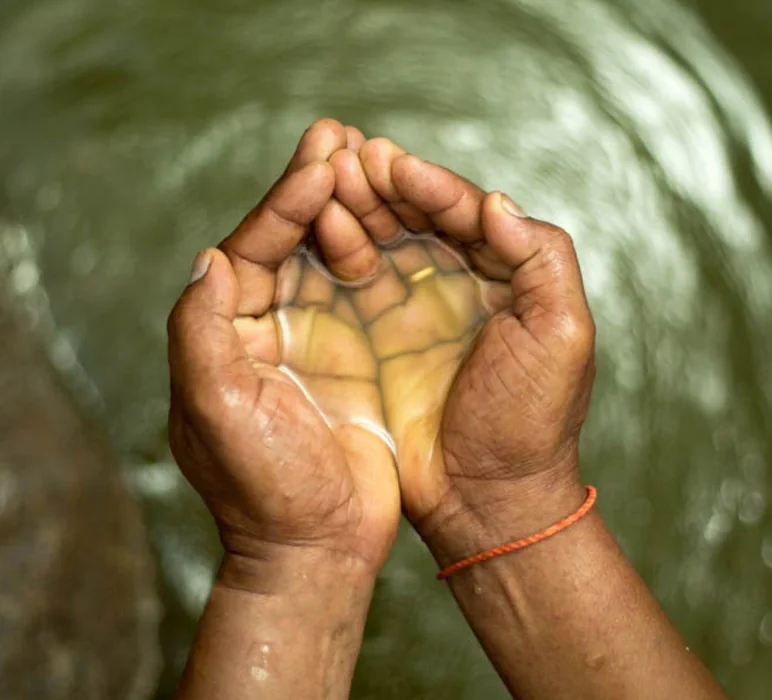
We promise that every purchase you make gives one person access to clean, life-changing water.
Explore timeless jewelry that carries love and inspires lasting impact.
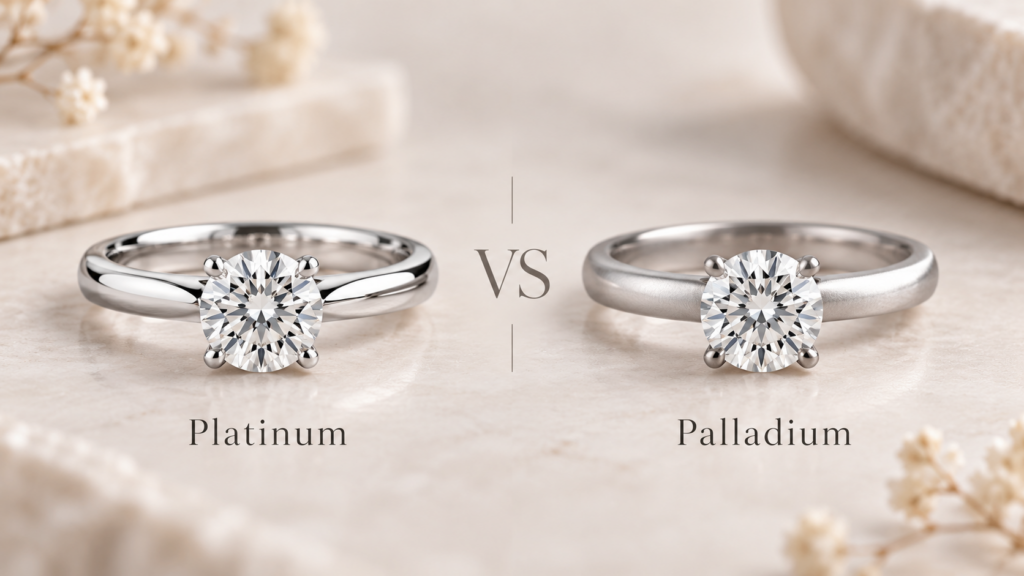
Platinum and palladium are both naturally white precious metals, but they differ in weight, price, wear, and service needs. In a palladium vs platinum choice, platinum offers more heft and palladium offers a lighter feel. The practical difference between platinum and palladium comes down to appearance, cost, durability, comfort, and access to service.
The short answer is simple. Choose platinum if you want a weightier ring and your exact design is available in that metal.
Choose palladium if you prefer a lighter feel. Confirm that your chosen design is available and plan for future resizing or repair.
|
Feature |
Platinum |
Palladium |
|---|---|---|
|
Color |
Naturally white, usually slightly brighter |
Naturally white, can look slightly grayer |
|
Density and feel |
21.5 g/cm³ as a pure metal, usually heavier at the same dimensions |
12.0 g/cm³ as a pure metal, usually lighter at the same dimensions |
|
Scratch behavior |
Will show surface marks and develop patina |
Will show surface marks and develop patina |
|
Long-term wear |
Durable, deep gouges and polishing can remove metal |
Durable, deep gouges and polishing can remove metal |
|
Purity marking |
Do Amore offers both 900 and 950 platinum |
950 means 95%, Do Amore says it uses 950 Palladium |
|
Price context |
Spot price changes daily, finished ring prices vary |
Spot price changes daily, finished ring prices vary |
|
Resizing and repair |
More jewelers are familiar with servicing it |
May require a jeweler with palladium equipment and experience |
|
Allergy caveat |
Sensitivity is possible, confirm the complete alloy |
Sensitivity is possible, confirm the complete alloy |
|
Best fit |
Someone who prefers more heft and broad repair access |
Someone who prefers a lighter feel and has confirmed service access |
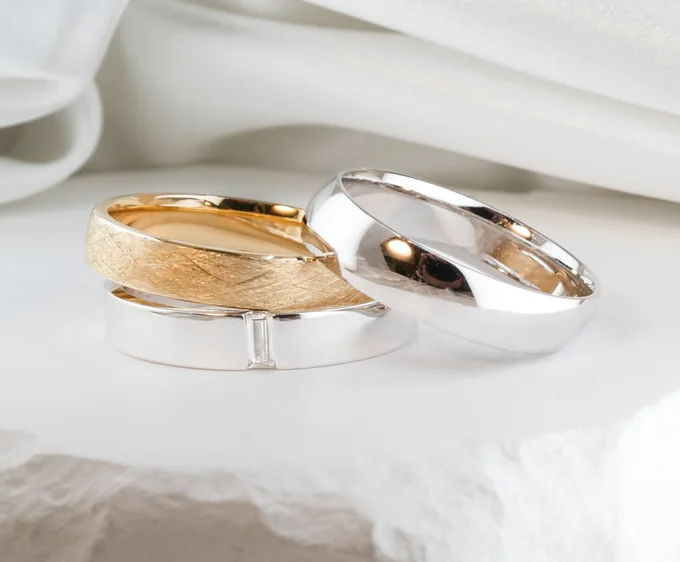
A platinum wedding band (left) looks very similar to a palladium wedding band (right).
As a platinum-group metal, palladium is often compared to platinum. The Royal Society of Chemistry describes palladium and platinum as silvery-white, corrosion-resistant metals.
Unlike white gold rings, which often use rhodium plating for a bright white finish, platinum and palladium are naturally white.
That natural color means less routine plating maintenance than white gold. Both metals develop a softer, matte-looking patina as surface marks build over time.
A 950 mark means 950 parts out of 1,000, or 95%, of the named metal. Do Amore says it uses 950 palladium. Its platinum guide says U.S. jewelry may use either 900 or 950 purity.
The exact alloy depends on the ring. FTC guidance on platinum jewelry explains that an item described simply as platinum should contain at least 950 parts per thousand pure platinum. Do Amore’s precious-metals reference uses the same parts-per-thousand system.
Check the purity mark and ask for the complete alloy before you buy. A 950 stamp tells you the amount of palladium or platinum, but not necessarily which metals make up the balance. That detail matters if you have a known metal sensitivity.
Patina is the soft, matte-looking finish that platinum and palladium rings develop as fine surface marks accumulate with daily wear.
Many people like the lived-in character of patina. If you prefer a brighter finish, a jeweler experienced with the alloy can repolish the ring. A white gold ring behaves differently and may need fresh rhodium plating to restore its bright white surface.
The palladium vs platinum price relationship changes with the metals market. At 10 p.m. ET on Oct. 20, 2026, Kitco quoted $1,632 per troy ounce for platinum and $1,080 per troy ounce for palladium. The LBMA platinum and palladium benchmark page is a useful place to confirm the latest market context because spot prices can change every day.
Spot price does not translate directly into a finished ring price. Purity, alloy, labor, setting design, and the amount of metal all matter.
Yes, palladium can be a practical alternative to platinum when you want a naturally white ring with less weight. Do Amore offers engagement ring settings in both metals, which lets you compare finished designs instead of judging loose metal samples. Check the finished ring price, purity mark, and future service path before choosing. Those details will tell you more than a one-day spot price.
Density matters too. The Royal Society of Chemistry lists pure palladium at 12.0 g/cm³ and pure platinum at 21.5 g/cm³, making platinum about 79% denser.
Two otherwise identical rings would use different weights of metal. Actual ring weight still depends on dimensions and alloy.
Daily wear depends on more than one property. Separate hardness, strength, and metal loss to compare these metals fairly.
Hardness describes resistance to indentation or surface deformation. It is different from strength, scratch behavior, and long-term metal loss. Jewelry alloy, ring profile, finish, and daily habits all affect how a ring picks up marks, so simple scratch rankings hide the differences that matter.
Both platinum and palladium will show surface wear and can develop patina. A light scratch may move metal along the surface. A deep gouge or repeated polishing can remove material.
Do Amore currently offers complimentary polishing, cleaning, and inspections. Gentle maintenance is still better than polishing more often than necessary.
For a ring, strength depends on the exact alloy and design, not only the metal name. Properly made platinum engagement rings and palladium rings can both suit daily wear, but prong shape, band thickness, setting style, and care affect long-term performance.
Weight creates the clearest comfort difference between these metals, but the ring’s dimensions and alloy shape how it feels.
Platinum is about 79% denser than palladium as a pure metal, so a platinum ring made to the same dimensions will usually feel noticeably heavier. The finished weight depends on the alloy and the ring’s dimensions, so a precise weight comparison requires the exact designs.
Some people enjoy platinum’s substantial feel. Others find the lighter weight of palladium more comfortable, especially in a wide band or a setting with a larger profile. For a slim engagement ring or wedding band, either metal can feel comfortable.
Choose the setting and metal together because band width, profile, and future service shape how the finished ring feels. Do Amore offers catalog settings and fully custom designs, so the design can be weighed alongside palladium’s lighter feel or platinum’s extra heft. A wide band makes the weight difference easier to notice, and an intricate design can make future resizing more involved in either metal. Compare the full ring, not the metal name by itself.
If you want to notice the ring’s weight on your finger, platinum may be the better fit. If you prefer a palladium metal ring that feels lighter during daily wear, palladium may suit you better.
Neither metal should be promised as universally hypoallergenic. A systematic review of metal contact dermatitis reports that both palladium and platinum can trigger sensitivity in some people, and reactions can involve other metals in an alloy.
Do Amore’s platinum guide says U.S. jewelry may use either 900 or 950 platinum, and its palladium guide confirms 950 palladium. Neither page identifies the complete alloy or confirms nickel content for every ring. If you have a known metal allergy, ask for the complete alloy used in your exact ring and discuss it with a clinician or allergist before choosing.
Confirm who will service the exact alloy before you buy. Palladium servicing has alloy-specific procedures for sizing, polishing, assembly, and repair, so ask who will handle maintenance and whether an outside repair would affect the warranty.
Do Amore currently offers palladium engagement rings and describes lifetime palladium refinishing on its site. It offers complimentary polishing, cleaning, and inspections. Its online form accepts resize requests for rings from an order.
For a palladium resize, confirm that the design and requested size change can be handled before sending the ring in.
Choose platinum when you want a substantial feel and your exact design is available in that metal. It can be especially appealing in a delicate engagement ring when you want to feel more weight on your finger.
Choose palladium when you want a naturally white ring with less weight. Palladium rings can work well for someone who dislikes a heavy band, but availability and access to an experienced jeweler should be part of the decision.
If you work with your hands, focus on the whole design rather than the metal alone. A lower-profile setting, sturdy prongs, sensible band thickness, and appropriate care can matter as much as choosing palladium or platinum. Remove fine jewelry for work that could crush, bend, or deeply gouge the ring.
Budget depends more on the exact design and current catalog price than on spot metal prices. Browse the available engagement ring settings in both metals, then compare like-for-like designs. If you are still weighing other white-metal options, Do Amore’s gold vs platinum guide explains how white gold changes the maintenance, weight, and price trade-offs.
These quick answers cover the questions ring shoppers ask most often.
No. Palladium and platinum are separate elements in the platinum group. They share a naturally white appearance and corrosion resistance, but palladium is much less dense and usually feels lighter in a ring.
As of October 20, 2026, platinum’s quoted spot price was higher than palladium’s in the figures checked for this refresh. Spot prices move daily, and finished ring prices reflect purity, weight, labor, and design, so compare the current price of the exact rings you are considering.
There is no useful one-word winner without naming the alloy and the property being tested. Hardness concerns resistance to indentation. Strength concerns how a material handles force.
Both rings can scratch, develop patina, and perform well in daily jewelry when the alloy and design are appropriate.
Many people with sensitive skin choose high-purity platinum or palladium, but neither metal is guaranteed to be reaction-free. Confirm the complete alloy in the exact ring, including nickel content, and consult a clinician or allergist if you have a known metal allergy.
There is no universal winner in a palladium vs platinum comparison. Platinum offers more weight, and palladium offers a lighter feel. Wear, service access, and the current price of your chosen design should guide the final choice.
Compare the same ring in both metals and choose the one that feels right for your priorities. If you still have questions, Do Amore’s team can talk through the options without pressure.
Once you know which metal fits your daily life, compare Do Amore’s palladium and platinum settings or ask the team about your chosen design. Every Do Amore purchase gives one person access to clean water, and you can later see the well your ring helped fund. Start with the settings that match your style, then use the weight, service, and alloy questions in this guide to narrow the choice.