


Your bag is empty
Explore timeless jewelry that carries love and inspires lasting impact.
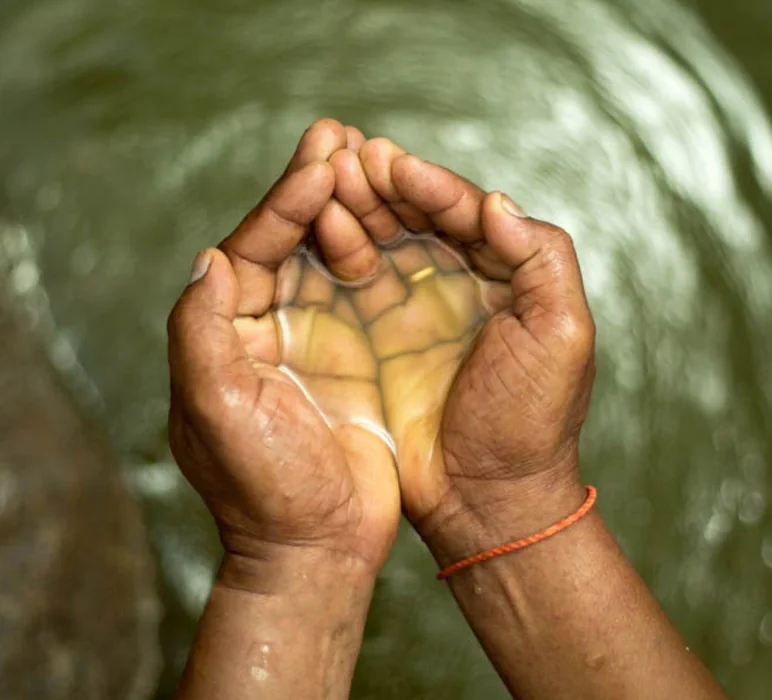
We promise that every purchase you make gives one person access to clean, life-changing water.
Explore timeless jewelry that carries love and inspires lasting impact.
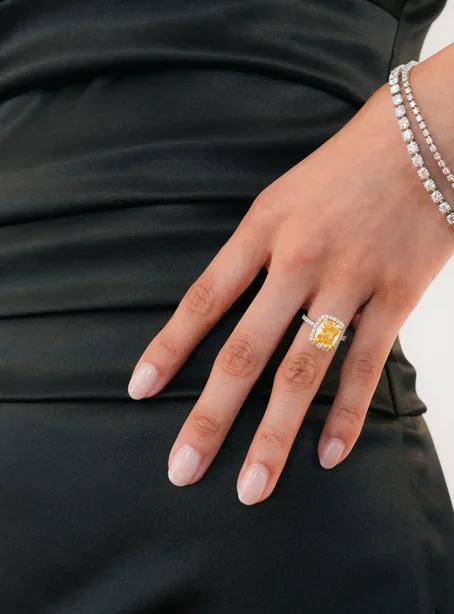
Elongated cushion cuts are long, elegant gemstones that make beautiful engagement rings. Their slender outlines can give you more finger coverage than a squarer cut of the same carat weight.
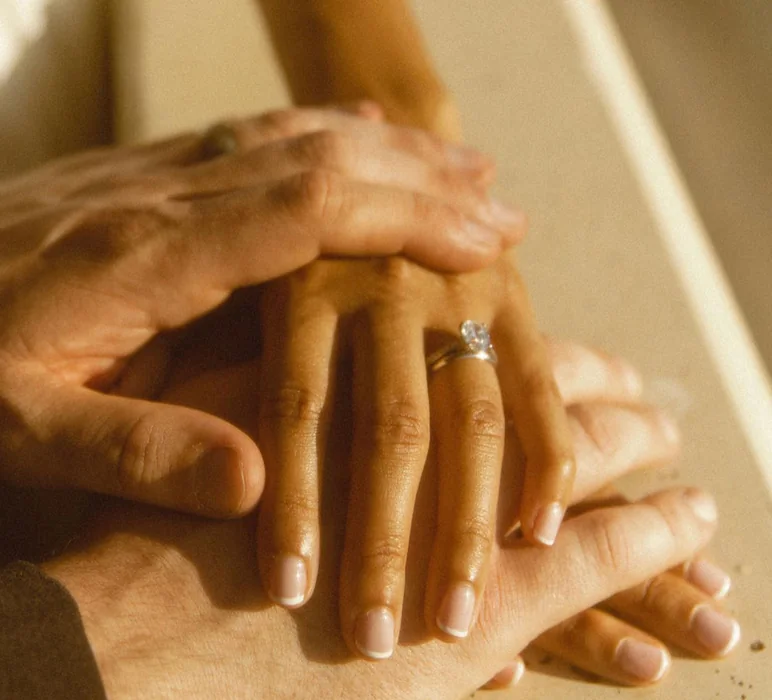
I love this shape because we chose it for my engagement ring. That experience taught me what to look for.
Here’s what you need to know.
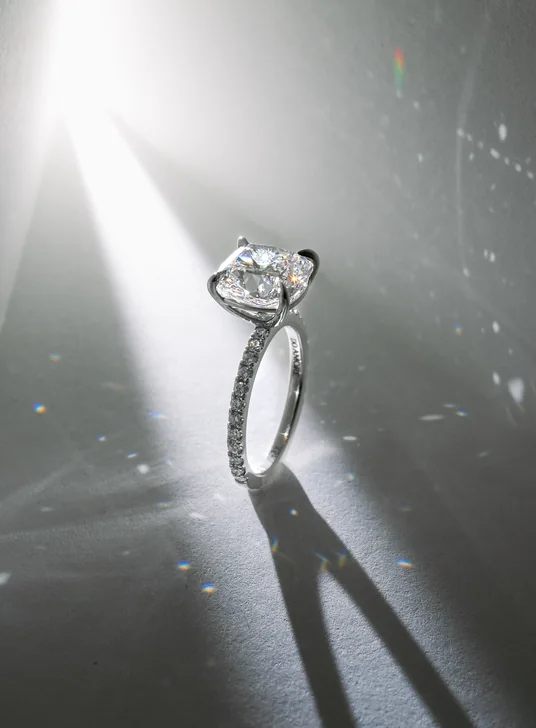
An elongated Cushion Cut has a rectangular, pillow-like outline with rounded corners and a length greater than its width. It keeps the softness of a cushion while creating a longer look across the finger.
Elongated cushions are often fashioned with brilliant-style facets, but their face-up pattern can vary.
If you want to see how that outline looks in finished rings, browse cushion cut engagement rings and compare several stones side by side.
An elongated cushion diamond is not rare based on one ratio alone. Length-to-width ratio describes whether the outline is narrow or wide, while availability depends on the material, current inventory, and the combination of color, clarity, faceting, and outline you want. A very specific long silhouette may take more searching.

Left: Square Cushion Diamond | Right: Elongated Cushion Diamond
Diamond, Sapphire, Ruby, Spinel, and Garnet can all work beautifully in an Elongated Cushion Cut Engagement Ring. An elongated cushion cut sapphire is especially worth considering if you want color with strong scratch resistance. The right material depends on your preferred color, budget, and daily wear.
The word durable covers more than a single hardness number.
Hardness measures resistance to scratching. Toughness describes resistance to breaking or chipping. Diamond ranks 10 on the Moh’s Hardness Scale, sapphire and ruby rank 9, and spinel ranks 8.
A high hardness score offers scratch resistance, but “will not scratch or chip easily” is never a guarantee.
For reference, most varieties of Garnet range from 6.5 to 7.5, depending on the variety, but the individual stone’s toughness, stability, inclusions, cut, setting, and daily wear all matter.
You have plenty of options across colors and budgets.

You have plenty of options across colors and budgets.
Start with the outline you love, then judge the individual stone rather than relying on a ratio or grading report alone.
Measure the space on your finger with a ruler before comparing stones. Jewelers use millimeters when measuring gemstones, so note the length and width you like.
Carat is weight, not visible size. Two stones with the same carat weight can face up differently, which is why comparing carat weight and face-up size is more useful than comparing weight alone.
That same finger coverage is why elongated cushions can suit engagement rings for small hands.
Length-to-Width Ratio describes how plump or slender an Elongated Cushion Cut looks. To calculate it, divide the gemstone’s length by its width.
A ratio of 1.00 is square, and progressively higher ratios look longer. The best ratio is the one whose outline looks balanced to you.

Pink Sapphire with 1.4 Length-to-Width Ratio

Blue Sapphire with 1.6 Length-to-Width Ratio

Ruby with 1.7 Length-to-Width Ratio
Two elongated cushions with the same ratio can still look different because the number measures outline, not corner shape, depth, faceting, or light return.
Do Amore can provide detailed photos or videos for side-by-side comparison. Start with the millimeter dimensions, then watch how brightness moves across the center and ends before deciding.
Next, choose your color and gemstone. Your preferred size and shape will narrow the options.
If you want a traditional colorless elongated cushion cut engagement ring, compare these Diamonds with White Sapphire and Moissanite. Rather than treating one ratio as a cutoff, compare the outline, symmetry, polish, millimeter measurements, and how evenly each stone returns light.
Lab white sapphire, moissanite, and Lab Diamonds are available in elongated shapes. Availability changes, so compare actual stones or current listings instead of assuming a particular material will always be available in a certain ratio.
GIA currently gives an overall cut grade only to round brilliant diamonds, not cushions or other fancy shapes. For an elongated cushion cut diamond, review the grading report’s symmetry, polish, measurements, and proportions, then study the stone in video.
Watch for a balanced outline, an appealing face-up pattern, and light return that stays lively as the stone moves. These common cushion-cut mistakes are useful to know before you compare candidates.

For a regal blue elongated cushion cut engagement ring, compare Blue Sapphire and Blue Spinel (read here about the difference between these two stones). Both materials can appear in beautiful elongated outlines, though the exact selection changes.
Compare individual spinels and sapphires for color, size, durability, and price. The right choice is the stone whose appearance and wear needs fit you best.
Both sapphire and spinel come in lab-grown versions.

Left: Blue Sapphire | Right: Blue Spinel
For a pink elongated cushion cut engagement ring, compare Pink Sapphire and pink spinel. Both come in beautiful shades, and the individual stone matters more than the species name.
Sapphire ranks higher for scratch resistance. Spinel can offer excellent color and value. Both are available in lab-grown versions.

Left: Pink Sapphire | Right: Pink Spinel
For a red elongated cushion cut engagement ring, compare ruby, red spinel, and garnet. Garnet can be a great value. Spinel offers its own mix of color, size, and durability.
Compare individual stones for color, clarity, treatment, origin, size, and price rather than assuming one red gemstone will always cost more.

Left: Ruby | Middle: Red Spinel | Right: Garnet
For a high-quality elongated cushion cut diamond, look beyond one number. Faceting style, outline balance, symmetry, polish, bow ties, and even light return all shape what you see.
A cushion brilliant tends to show larger, more distinct flashes, with a facet pattern that reads clearly across the stone. A modified brilliant uses extra facets, especially on the pavilion, and may create a finer, more splintered pattern.
“Crushed ice” describes a dense pattern of small, flickering reflections that can look like sparkling ice. Some people love that shimmer. Others prefer broader flashes. Neither is automatically better.
Antique or old mine-style cushions usually show chunkier facets, a higher crown, deeper proportions, and often an open culet. Their glow can feel softer and more romantic than the sharper pattern of many modern cushions.

Top Row: Poor Symmetry | Bottom Row: Good Symmetry
An elongated cushion can look cloudy when tightly grouped inclusions create haze or when dull face-up zones stay lifeless as the stone moves.
Fluorescence does not cause haziness by itself, though it can intensify rare, pre-existing light-scattering defects. Review the grading report and video together. A crushed-ice pattern can look busy without being milky, so judge haze and light return separately.
An antique elongated cushion cut diamond is identified by a combination of features, not asymmetry alone. Look for larger, chunkier facets, a high crown, deeper proportions, and often an open culet. These stones can show a softer pattern of light than modern cushions, which is part of their charm.
A large culet can support the identification, but the complete facet pattern and proportions matter more than any single clue.

Antique Elongated Cushion Diamond
A bow tie is a dark contrast pattern seen in some elongated diamond shapes. In an elongated cushion, judge any dark or watery area in motion and in more than one lighting environment. The pattern should not dominate the face-up view or leave one area looking lifeless.
Long stones can exhibit uneven light return. The center or ends may look brighter instead of the stone staying lively throughout. Look for even sparkle and light return as the stone moves, and compare videos before deciding.

Left: Even Light Return; Right: Half/Half Extinction
The best elongated cushion settings protect the stone, support the outline you love, and fit the way you plan to wear the ring. Setting height and wedding-band clearance matter as much as the style itself.
A north-south solitaire emphasizes length and gives the center stone plenty of attention. Browse cushion cut solitaire engagement rings to compare prong placement and band width. An east-west setting turns the stone sideways for a lower, wider look that feels more modern.
A halo adds outline and can make the center look broader. A three-stone design adds side-to-side presence. Compare cushion cut halo engagement rings and this guide to cushion halo settings to see how proportions change the overall look.
A bezel wraps the edge in metal for a smooth, protected profile, though it changes how much of the stone’s outline is visible. Prong settings keep more of the edge open. Make sure the rounded corners and girdle are secure, and ask how high the stone will sit.
Yellow or rose gold can add warmth. White gold or platinum keeps the setting visually cool.
The best metal color is the one that suits the stone and wearer. If you want a flush wedding band, check the basket height and any halo or prong structure before choosing the setting.
It is a cushion-shaped diamond with a rectangular outline, rounded corners, and a length greater than its width. It combines the softness of a cushion with more finger coverage than a square outline.
They can look larger face up than some stones of the same carat weight because their length spreads across more of the finger. Compare millimeter dimensions, depth, and video instead of using carat weight alone.
Higher length-to-width ratios look progressively longer, so 1.40 appears more elongated than 1.20. There is no universal best ratio. Choose the outline that looks balanced and appealing to you.
Availability depends on the material, current inventory, and the exact combination of ratio, color, clarity, and faceting you want. A very specific long outline may take more searching, but ratio alone does not prove rarity.
Solitaire, halo, three-stone, bezel, and east-west settings can all work. The best choice protects the stone, gives you the look you want, and leaves enough clearance for your preferred wedding band.
Yes. Elongated cushions are available as natural and lab-grown diamonds.
Neither origin is automatically better, so compare the grading report, measurements, faceting, and light performance. Browse cushion cut lab-grown diamonds if that option fits your priorities.
Two elongated cushions with similar ratios can still look very different on the hand. I can help you compare outline, faceting, light return, and setting fit before you decide. My name is Corinne, and elongated cushions are one of my favorite shapes.
Send me a note here, or email me here! Tell me what you’re looking for, and I’ll help you compare the options.
Do Amore offers responsibly sourced natural and lab-grown diamonds, and every ring helps build a clean water well.
Gemological Institute of America. “Cushion Cut Diamond: An Old and New Classic.” GIA 4Cs, 9 Sept. 2015.
Gemological Institute of America. “Length-to-Width Ratios Among Fancy Shape Diamonds.” Gems & Gemology, Summer 2011.
Gemological Institute of America. “GIA Diamond Grading Reports: Understanding Carat Weight.” GIA 4Cs, 9 May 2017.
Gemological Institute of America. “More than the Mohs Scale: Understanding Gem Durability.” GIA 4Cs, 14 Mar. 2016.
Gemological Institute of America. “GIA Diamond Cut Grade: 6 Things You Need to Know.” GIA 4Cs, 3 Feb. 2026.
Gemological Institute of America. “Diamond Inclusions Defined.” GIA 4Cs, 25 Nov. 2013.
Gemological Institute of America. “Diamond Fluorescence: Benefits and Drawbacks.” GIA 4Cs.