






Your bag is empty
Explore timeless jewelry that carries love and inspires lasting impact.
We promise that every purchase you make gives one person access to clean, life-changing water.
Explore timeless jewelry that carries love and inspires lasting impact.
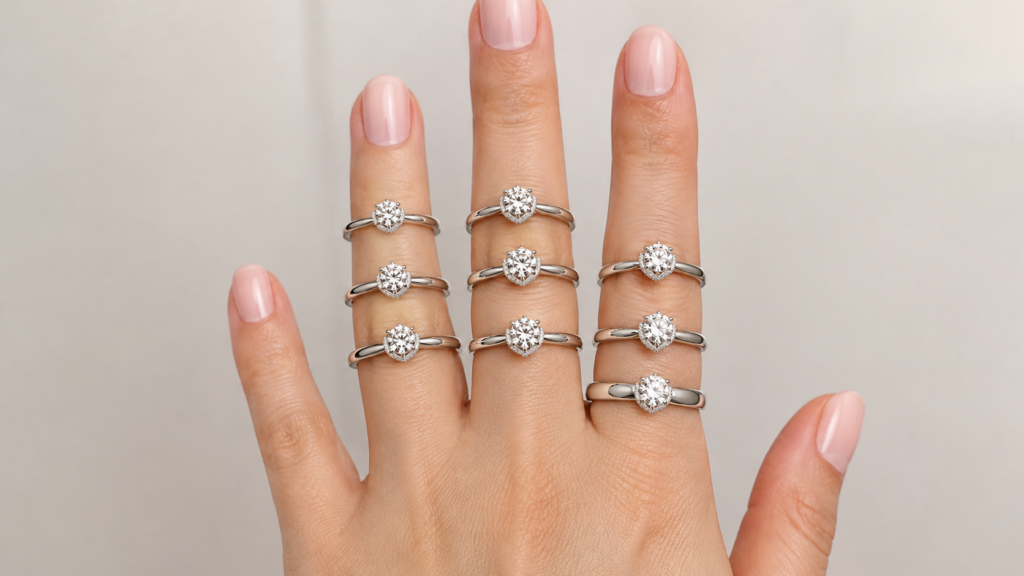
There is no single correct engagement ring thickness. A delicate band can be beautiful, but the decision depends on two separate measurements. Check the ring’s width across the finger and its depth from the inside surface to the outside, then judge both alongside the stone, setting, finger, wedding band, and everyday routine.
If a listing shows 1.5, 1.8, or 2 mm, treat the number as a starting point, not a universal safety rule. GIA notes that the narrowest part of a ring may be at the top or bottom of the shank, so ask where every measurement was taken and whether setting or finishing will change it.
The best engagement ring band thickness works with the whole ring. Start by separating width from depth, then look at the taper, setting details, center-stone scale, ring size, wedding-band fit, and the wearer’s daily routine. A low number by itself cannot settle the choice.
Words such as dainty, substantial, and low profile describe an impression, not a specification. Ask for finished measurements in millimeters and make sure the person answering identifies exactly where each number was taken.
Ring band width and thickness measure different directions, while profile describes the cross-sectional shape. Width runs across the finger in the top view. Thickness, sometimes called depth, runs from the inside surface to the outside surface in the side view.
Profile describes the cross-sectional shape. A rounded, flat, comfort-fit, or knife-edge profile can change how a band looks and feels even when another measurement matches. GIA identifies the head, shoulders, and shank as the three main parts of a typical ring setting, which is why a single number rarely describes the entire design.
Treat a 1.5 mm, 1.8 mm, or 2 mm engagement ring band as a measurement to investigate, not an automatic pass-or-fail mark. A product listing may use one of those figures for top-view width, side-view depth, or a point that is not the narrowest part of the finished shank.
Ask for planned finished width and depth at the base, shoulders, and narrowest point. Ask whether the quoted dimensions describe the design before or after stone setting, polishing, and finishing. Those answers make the number useful.
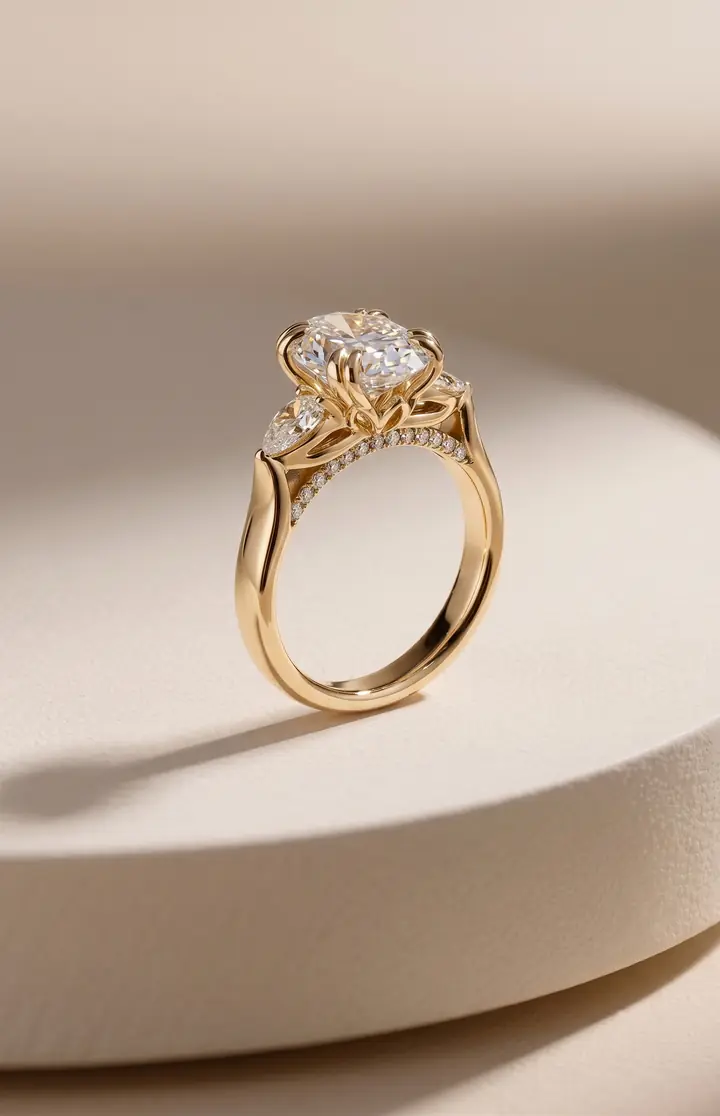
A thin engagement ring band gives the ring a lighter, more delicate frame and can make the center stone appear more prominent. Setting pavé or side stones may leave less metal around decorative details. Review the taper, pavé, side stones, future resizing, and ordinary wear more closely.
A thin band can still be a sound choice, but the exact construction matters more than a reassuring label. GIA notes that shanks can become too thin after years of wear and may eventually need partial replacement, which is a useful reminder that present dimensions and future maintenance belong in the same conversation.
A thicker engagement ring band can suit a more substantial look, a larger visual scale, or details that need more room. It may feel more noticeable between neighboring fingers, and a wide ring can fit differently than a narrow one.
More metal is not a promise that a ring is indestructible. The setting, transitions, finish, stone placement, ring size, and wear conditions still matter. Choose the added width because it serves the design and feels right, not because bigger always sounds safer.
A larger center stone does not dictate one engagement ring band width or shank width. Its dimensions need to work with the head construction, shoulders, side stones, setting height, and the ring’s overall balance.
Look at the ring from the top and side. Then ask where the structure becomes narrowest and how decorative work changes the remaining metal. This gives you a better question than asking whether a particular carat weight automatically needs a 2 mm band.
Your daily routine changes the tradeoffs, but it does not create one correct band thickness. Think about gloves, gripping tools, repetitive hand use, impact exposure, and frequent removal when you weigh profile, setting height, and maintenance. Do Amore’s active lifestyle guide adds a broader routine and removal checklist.
No band dimension makes a ring safe near moving machinery, where safety guidance warns that rings and other jewelry can become entangled. If your routine is hands-on, decide when the ring will be worn, when it will be removed, and how often it should be inspected.
The chosen metal, geometry, manufacturing method, and stone setting all change how band dimensions work. Two rings can share the same top-view width yet differ in side-view depth, interior shape, transitions, and the metal left around set stones.
Have the jeweler assess your actual design instead of borrowing a measurement from another ring. That keeps the advice tied to the piece you will receive and stops a general guideline from sounding like a guarantee.
Metal choice belongs in the design review because alloy composition affects durability and maintenance. Skip blanket rankings that call one metal universally strongest or safest. The better question is whether the chosen dimensions, setting, and manufacturing plan suit the exact metal you are considering.
If you are choosing between gold colors, karats, or platinum, ask what the seller offers and how that choice affects care, refinishing, and possible resizing. Do not assume that one measurement transfers unchanged across every material and design.
Compare taper, pavé, and side stones before accepting the widest listed measurement. A taper can make the band look delicate near the center stone and leave a broader base or stronger-looking shoulders. A knife edge can change the visual impression without keeping the same width and depth around the ring.
Pavé settings use small stones held by tiny beads or prongs of metal, and GIA notes that pavé-set bands can be harder to resize. Review the narrowest finished measurement together with the setting method instead of relying on the widest marketing dimension.
Comfort depends on width, depth, interior contour, ring size, neighboring fingers, and the total wedding-set stack. A ring can look slim from above yet still feel substantial from the side, but two comfortable rings may feel snug when worn together.
GIA treats tapered rings, wide bands, bridal sets, and convex interiors as distinct ring-sizing situations. That is a strong reason to test or professionally size the combination you plan to wear rather than applying a fixed size adjustment from a chart.
Wider bands usually cover more skin and may feel snugger than narrow bands in the same nominal size. Interior contour and finger shape matter too, so a fixed instruction to size up would be misleading.
If you can, try a sample with a similar width and profile. Ordering online? Do Amore’s ring size guide can help you prepare, then give the jeweler your usual ring size, planned band width, intended stack, and fit concerns before production.
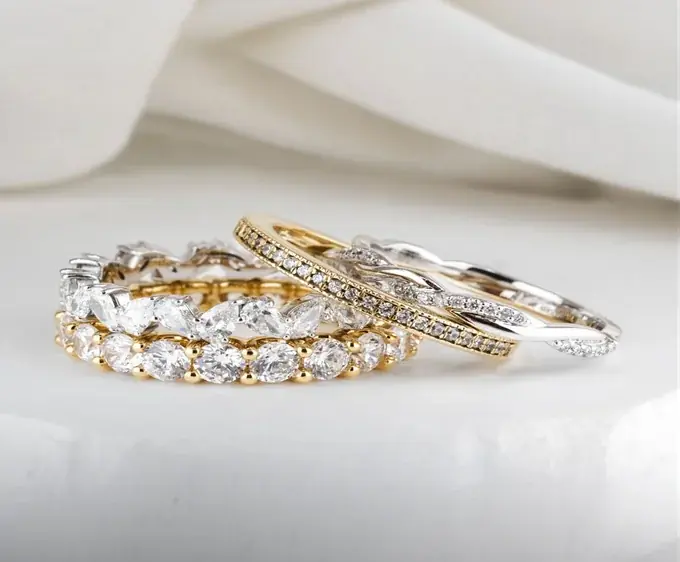
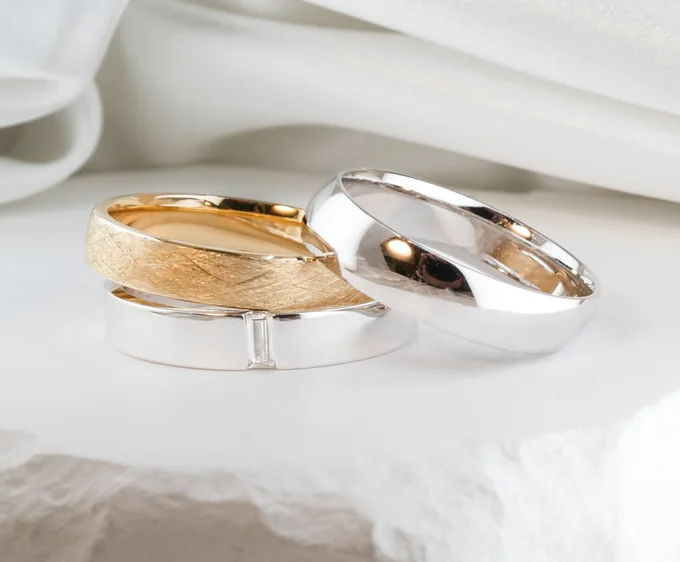
Review the engagement ring and wedding band widths as one set before you approve either design. Check whether they sit flush, whether one needs a contour, and how the combined width feels on your finger.
The two bands do not need identical widths. Matching numbers can create a balanced look, but contrasting widths can work too. Proportion, comfort, setting clearance, and the wearer’s preference matter more than forcing the measurements to match.
Before you approve a ring or CAD, confirm what will be measured, where each measurement will be taken, and whether the figures describe the finished piece. Keep visual proportion questions separate from construction, fit, and future maintenance.
A checklist helps you ask better questions, but it does not replace a jeweler’s assessment of the exact design. Keep the final measurements, approved views, and written answers with your order records.
Ask for top, side, and three-quarter views, then match each view to the planned finished measurements. The same checklist works whether you are comparing a ready-made ring or reviewing a custom design.
Custom design is useful when a ready-made ring cannot deliver the width, taper, setting height, or side-view profile you have in mind. Do Amore begins with your inspiration and a quote. After you place the order, the team shares 3D renderings and a 1:1 digital model, and handcrafting begins only after you approve the renderings.
Use that review as a checkpoint. Compare the top and side views, then ask the design team to confirm planned width and depth at the base, shoulders, and narrowest point. The rendering helps you judge visible proportions, but it cannot guarantee future durability or replace the team’s judgment about what can be made.
Do Amore’s custom engagement ring guide gives a fuller walkthrough of the custom process.
When deciding how thick an engagement ring band should be, choose dimensions that suit the whole ring and the way it will be worn. Delicate and substantial designs can both work when you understand the finished measurements, setting, fit, maintenance needs, and limits. A viral minimum cannot make that decision for you.
A ready-made ring may already have the proportions you want. Use the width-and-depth framework to browse Do Amore engagement rings, then compare each design’s finished dimensions, setting, and fit. If you need a particular taper or side-view profile, share those details with Do Amore’s custom design team and use the post-order rendering review to confirm planned width and depth before handcrafting begins.