






Your bag is empty
Explore timeless jewelry that carries love and inspires lasting impact.
We promise that every purchase you make gives one person access to clean, life-changing water.
Explore timeless jewelry that carries love and inspires lasting impact.

Platinum and white gold may look almost identical when a ring is new. Wear them for years, though, and the differences become easier to notice. Platinum keeps its natural white color and feels denser on the hand. White gold feels lighter and has a bright rhodium finish that may need refreshing over time. Once you settle on metal, Grown Brilliance versus Blue Nile can help compare two retailers for lab-grown diamond rings.
Either can be the right choice. Focus on the finish, weight, upkeep, and price that fit your life.
Which is better, platinum or white gold? Choose platinum for natural white color, a substantial feel, and no color replating. White gold feels lighter and usually starts lower in price. With sound workmanship and regular care, either metal can support engagement rings worn every day.
That leaves one useful question. Which trade-offs will you still feel good about after the showroom shine softens?
Think about what you will notice most often. Color greets you every day, you feel the weight whenever you move your hand, and maintenance shows up over years. The initial price shapes your decision, but the ring’s feel and changing finish stay with you long after the receipt is tucked away.
Use this platinum vs white gold comparison to narrow the choice before you study individual settings. No single row decides it. Your priorities do.
| Priority | Platinum | White Gold |
| Composition | Naturally white platinum alloy. Check the fineness mark | Gold alloyed with white metals, commonly 14K or 18K |
| Color | Soft grayish-white | Bright white when rhodium plated |
| Weight | Heavier and more substantial | Lighter on the hand |
| Wear | Scratches develop into patina with strong metal retention | Holds a bright polish, though abrasion removes small amounts over time |
| Maintenance | Polish if desired. No color replating | Polish and refresh rhodium as needed |
| Skin sensitivity | Ask for the exact alloy. No universal guarantee | Ask for the exact alloy. Some recipes contain nickel |
| Initial cost | Typically higher | Typically lower |
| Lifetime upkeep | No color replating. Routine inspection and repair still matter | Rhodium service may be needed. Do Amore currently includes it under warranty |
| Best fit | Natural white color, heft, patina, lower color maintenance | Bright finish, lighter feel, lower typical starting price |
When comparing a platinum band with white gold, platinum has the edge when natural color, noticeable weight, and less color maintenance matter most. White gold fits better when you want brightness, a lighter feel, and a more accessible starting price.
Now picture the ring five years from today. Its mirror polish has softened, a patina may be forming, and a little upkeep has become part of owning it. The better choice is the finish you will enjoy after ordinary workdays, travel, celebrations, and plenty of small knocks.
The setting matters just as much. Prongs, pavé, engraving, band width, and profile all change how a ring handles daily wear. A thoughtful design in either metal will serve you better than a choice based on reputation alone.
The platinum vs. white gold composition difference explains how these metals reach a similar color by different routes. Platinum begins as a naturally grayish-white precious metal. White gold begins as gold, gains its pale color from other metals in the alloy, and commonly receives rhodium for a brighter surface.
An alloy is simply a mixture of metals. Jewelers use alloys because pure precious metals can be too soft or awkward to shape for daily-wear jewelry. Change the recipe and you change the color, hardness, workability, and feel of the finished ring.
Platinum jewelry mixes platinum with other metals so a jeweler can shape and finish it. Purity appears in parts per thousand. A 950 mark means 950 parts platinum out of 1,000, which is why the stamp inside the ring is worth checking.
GIA’s engagement ring buying guidance notes that FTC standards require jewelry labeled simply as platinum to contain at least 95% pure platinum. Lower-purity alloys need more specific disclosure. That rule helps you understand what the label means without assuming every platinum ring uses the same recipe.
For the wearer, color is the immediate benefit. Platinum does not depend on a bright white surface coating, and its density gives the ring a noticeable presence on the hand.
White gold is real gold mixed with lighter-colored alloy metals. Karat is the purity measure. A 14K alloy is about 58.3% gold, and 18K is 75%. If you are comparing 14K vs. 18K white gold, remember that the full alloy recipe still affects color and wear. The higher gold percentage is one reason to compare 18K white gold engagement rings separately.
GIA’s guide to white metals notes that white gold can include nickel or palladium along with copper and zinc, and that it is often rhodium plated. The exact recipe varies. If you have a known metal sensitivity, ask for the alloy specification rather than trusting the broad label alone.
Rhodium gives freshly finished white gold its cool, reflective brightness. The coating gradually thins where the ring meets the most friction, allowing more of the alloy’s warmer tone to show. That shift is normal appearance maintenance.
Any platinum vs. white gold durability comparison needs more than one measure. Hardness describes resistance to scratching, toughness concerns bending or breaking, and metal retention tracks how much material remains after years of rubbing, polishing, and repair.
Both metals scratch, and both may eventually need prong work or another repair. The real difference appears in the surface and in how you feel about those marks after years of daily wear.
A ring’s design can matter more than a broad metal ranking. Thin bands, tall center stones, and delicate pavé each bring their own weak points. Ask how the prongs are shaped, how much metal supports the stones, and when that exact ring should be inspected.
A scratch usually shifts platinum at the surface instead of removing all of the displaced metal. As those tiny marks collect, they blend into a soft, satiny patina. Some people love its quieter character. Others polish it for more shine.
The disadvantages of platinum jewelry include more visible surface marks and a heavier feel, but those trade-offs are not the same as poor durability. Freshly polished white gold may hide marks longer. Platinum still retains its metal well, one reason jewelers often value it for prongs in platinum solitaire engagement rings.
Platinum still needs care. Enough force can bend a prong, deform a band, or strike a high-set center stone. Regular inspection matters with either metal.
A platinum ring can look duller or grayer as small surface marks build into a soft patina.
That change does not mean the metal has lost its natural white color. Do Amore provides complimentary polishing, cleaning, and inspection on its rings, so owners who prefer a brighter finish can request service. Leave the patina in place if you like its softer look.
Fresh rhodium gives white gold a clean, bright polish. Underneath, the alloy is durable enough for a daily-wear ring, though friction slowly affects the coating and the metal itself.
Rhodium wear follows no fixed schedule. Handwashing, gripping tools, gym habits, work routines, and body chemistry all affect how quickly the warmer base tone appears.
Gold content changes the alloy too. A 14K ring contains more non-gold alloy than an 18K ring, but the full recipe still matters. One percentage cannot tell you how the ring will feel or wear.
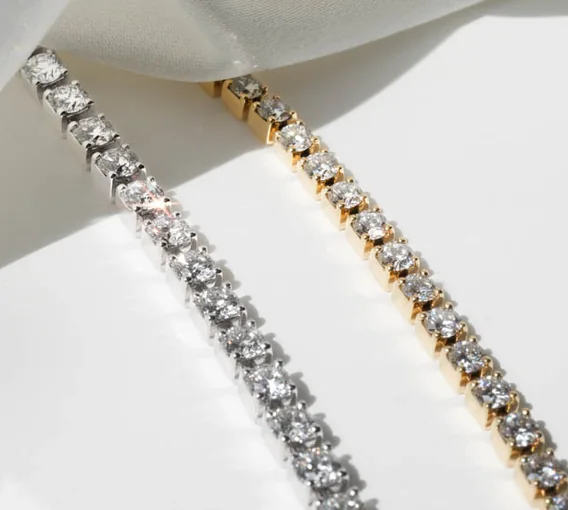
When comparing white gold vs. platinum color, platinum has a softer grayish-white tone and freshly plated white gold looks brighter and more mirror-like. White gold halo engagement rings can emphasize that crisp brightness around the center stone, but beauty is still personal.
Polishing can bring more shine back to platinum, though plenty of wearers let the patina grow. White gold can be polished and then replated when the bright surface needs refreshing. Let the ring’s actual condition set the timing.
A wedding band changes the maintenance picture. Whether you choose a white gold or platinum band, rings that touch rub against each other, especially where two different profiles meet at narrow pressure points. Before stacking, show the full set to the jeweler so the metals, shapes, and heights can be evaluated together.
Do Amore currently includes free rhodium service with its lifetime warranty. That can remove a separate appearance-maintenance charge from the ownership calculation. Confirm that your ring qualifies when you order.
Price and comfort are personal. For a platinum vs. white gold price comparison, compare finished-ring quotes for the same design instead of raw metal prices. The amount of metal, density, labor, setting details, and included care all shape the number you actually pay.
Then compare the feel. A wide platinum band can sit very differently on the hand from a narrow white gold band, even when both fit.
Platinum settings often start higher because the metal is dense, so the same design uses more material by weight. Shaping and finishing platinum affects the quote, too.
Is white gold more expensive than platinum? It usually starts lower at purchase. Over time, rhodium replating can add appearance-maintenance costs. A service policy may reduce or remove that expense, so read the warranty alongside any general price comparison.
You are paying for a finished design, secure setting, craftsmanship, fit, and years of wear. Treat the ring as jewelry you will live with, not as a quantity of metal bought for financial return.
Platinum can be worth the higher starting price when natural white color, a heavier feel, and avoiding rhodium replating matter more to you than upfront cost.
Do Amore offers many engagement ring designs in both platinum and white gold, which makes a like-for-like comparison possible. Pick one setting, compare the finished prices and included care, then decide whether platinum’s wearing experience earns the difference for you.
In a white gold vs. platinum weight comparison, platinum feels more substantial and white gold feels lighter. Some people love platinum’s reassuring heft. Others notice it while typing, exercising, or moving through a long day. Comfort is personal.
If you can, compare the same setting in both metals. Band width, thickness, ring size, center-stone height, and a future wedding band may influence comfort as much as the metal itself.
People with metal sensitivities often consider high-purity platinum alloys, but some white gold recipes contain nickel. A broad metal label still cannot predict what your skin will tolerate.
Ask for the complete alloy composition, especially if jewelry has irritated your skin before. Skip any blanket hypoallergenic promise, and speak with a qualified health professional about medical concerns.
Begin with the wearing experience you want. Do you prefer natural or plated color? Noticeable weight or a lighter feel? How do patina, replating, budget, and any known sensitivities shape the setting you choose.
Buying for someone else? Look closely at the jewelry they already wear. Bright, lightweight pieces may point toward white gold. Substantial rings or softly aged finishes may make platinum feel familiar. Their habits tell you more than any generic best-metal claim.
Design can make the ring’s platinum-versus-white-gold decision more concrete. White gold solitaire engagement rings keep the focus on the center stone, but fine pavé, slender prongs, engraving, and sharp edges place different demands on the metal and workmanship. Ask why the jeweler recommends one metal for that exact setting and daily wear.
The platinum vs. white gold choice comes down to the wearing experience you value. Platinum suits natural color, noticeable weight, and less color maintenance. White gold suits a lighter feel, a bright plated finish, and a more accessible starting price. Either can be excellent. Choose the everyday feel and changing finish you will still enjoy years from now.
To see the difference in real settings, compare Do Amore’s platinum engagement rings with its white gold engagement rings. Look at similar band widths and profiles so the comparison is fair.
Do Amore crafts its rings with recycled precious metals, and each purchase provides clean water to one person. You can learn how the one-to-one model works and see the projects behind it on Do Amore’s impact page. The ring you choose can carry meaning far beyond the proposal.
Gemological Institute of America. “10 Tips for Buying an Engagement Ring.” GIA 4Cs.
Gemological Institute of America. “How to Pick the Right Metal for Your Engagement or Wedding Ring.” GIA 4Cs.